Life Expectancy

When I was young I typically didn’t think about death, unless having to sing or speak in front of a group of people could be counted as death. After high school graduation, I hit the road hitchhiking around the country for a year and I had that youthful innocence and naivety so the thought still didn’t cross my mind. It wasn’t that I was young and thought of myself as invincible, it was more like I was young and didn’t think.
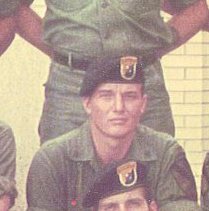
After a year on the road, I joined the Army and found myself working as an Airborne Ranger in one of the three or so Ranger companies in existence at the time (as the Vietnam conflict was winding down). At that time, there were way fewer than 4,500 of us who wore the tab and worked in Ranger units. Pretty elite. I can still recall when I gained an understanding of violence and how I became physically ill as I evolved from a peace-loving hippy to Killerman’s son. Death was our business so, of course, I thought about death. One of our common retorts, when faced with something bad, was, “It don’t mean sh*t. We’ll be dead soon anyway.” We based that philosophy on the history of the Rangers (think Tom Hanks in Saving Private Ryan or the stories told in Northwest Passage). Rangers were highly motivated but historically didn’t belong to anybody so they were often given the toughest assignments that resulted in the highest casualties. In reality, we probably had a better chance at survival than regular soldiers because of our training. That time spent under the black beret (now it’s tan) was hard and would result in a broken nose, broken jaw, missing teeth, broken foot, a tiny little piece of shrapnel in my belly, and multiple back operations over the following years. I went from the Rangers to The Old Guard and served in Arlington Cemetary and The White House at the time of Nixon. Later in life, when I surveyed social media for the guys I served with, very few of them were actually killed on the job. Nevertheless, the thought of an early death became embedded in me.
The years after I left the Rangers, up until I turned thirty, were filled with the continued anticipation that something was going to kill me, and that started a pattern in my behavior. I went to school, earned a bachelor’s and a master’s degree, became a certified public accountant, and then a certified financial planner but I didn’t turn that knowledge on myself. When I turned thirty, it was as if I didn’t know what to do because I hadn’t planned or dreamed of life after that age, but by that time I had cemented my personality.

I call these next years my mental illness years. As the years passed, I kept slipping in and out of depression, strapping a gun to my ankle, and keeping a ball-peen hammer under my driver’s seat in the car. I was in and out of marriages and relationships, never holding a job longer than two or maybe three years, never saving money, and becoming estranged from my boys. I started living in Mexico, until finally I pretty much hit bottom, at least emotionally. Life had drained me; it was hard. Even so, because of my gene pool and my athleticism, I started thinking I’d make it to 82; that seemed a good age. My mother is 93 (she doesn’t know this story). I thought that at 82, I’d hike up Long’s Peak in the winter, sit down under a tree or a rock, and go to sleep.
But then a couple of things happened. Much like the words of Joseph Campbell, I went into the forest and found the jewels, and returned to the world. And, as often happens, I met a woman, and when I first shook her hand, something changed.

So then I started thinking, just for the fun of it, why not aim for 100? I went online and found a mortality calculator that the insurance companies used and I ran everyone I knew through it. That calculator didn’t give me another thirty years, but I didn’t care, I was going to live to a hundred, and I smiled. Life had been hard but now, at age 69 I was happy. I knew that by living to a hundred I’d have to experience the death of most people who were dear to me, possibly even my sons, but living became a happy goal for me and I started planning accordingly. I thought, “Be the best person you can be. Help others, the ones closest to you. As you age, gain wisdom and tolerance, not anger. Love yourself.”

Now, I’m in a happy, loving relationship with a beautiful and wonderful woman, T. She has three daughters who each have their own challenges but are also bright and beautiful. I’ve somewhat repaired my relationships with my sons but there’s still work to be done there, and I’ll probably never be able to get close to my granddaughters because of the physical and emotional distance I put between us.

I’m pretty sure I had COVID before COVID was a thing and since that time I’d been short of breath. Over the past few years, I also had a prostate cancer scare (snip, snip, snip), carpal tunnel surgery, and rotator cuff surgery that failed, leaving me with the need for a reverse shoulder replacement (which I’ve declined because while I can’t lift my arm, I’m not in pain), a wonderful knee replacement that I’m so happy with, split fascia on the left shin, drop-foot and paralysis on the right foot, and a few other minor ups and downs physically.

Last summer, at my annual physical, I remarked about about my shortness of breath. I should mention that I’ve had sarcoidosis for years (that’s another story from my crazy years) and my doctors know this. There was a new cardiac physician assistant on duty and they called her in to see me. She was concerned that the sarcoidosis might now be involving my heart so she brought in a team and they ran some tests as I sat and stood and sat again, smiling, thinking they were overdoing things. Well, that started the ball rolling. That was last June. Since then, I’ve had 29 tests, procedures, and treatments. At the end of November, I was diagnosed with wild-type amyloidosis. You can google it. At this time, there are way fewer than 4,500 people in the U.S. who are diagnosed with this annually. Once again, pretty elite.

My disease or the tests triggered something because where my normal resting heart rate was 42, it suddenly increased to 105 and remained there. After two months of that and no sleep, I was exhausted. I tried to hide it but every time I walked I had to stop, bend over to rest, and my eyes would fill up. I was finally defibrillated, or shocked, back to a normal heartbeat, and three weeks later I still have the outline of the device on my chest. T says it looks like a horse kicked me.

When I see the staff at my specialist’s office, they tell me I’m lucky because of the type of amyloidosis that I have and that I should make it another four or five years.

In December, I went for a walk, my normal walk around the neighborhood. This was a couple of weeks after my diagnosis. I had to cross a road, so I looked both ways and saw there was no traffic. The next thing I knew, there was a circle of cars stopped around me and someone was asking me if I needed help. Someone grabbed my glasses while a couple others lifted me to my feet. A lady said, “Is there anything we can do?” I wanted to ask for a ride home but I just said, “No, but thanks.”
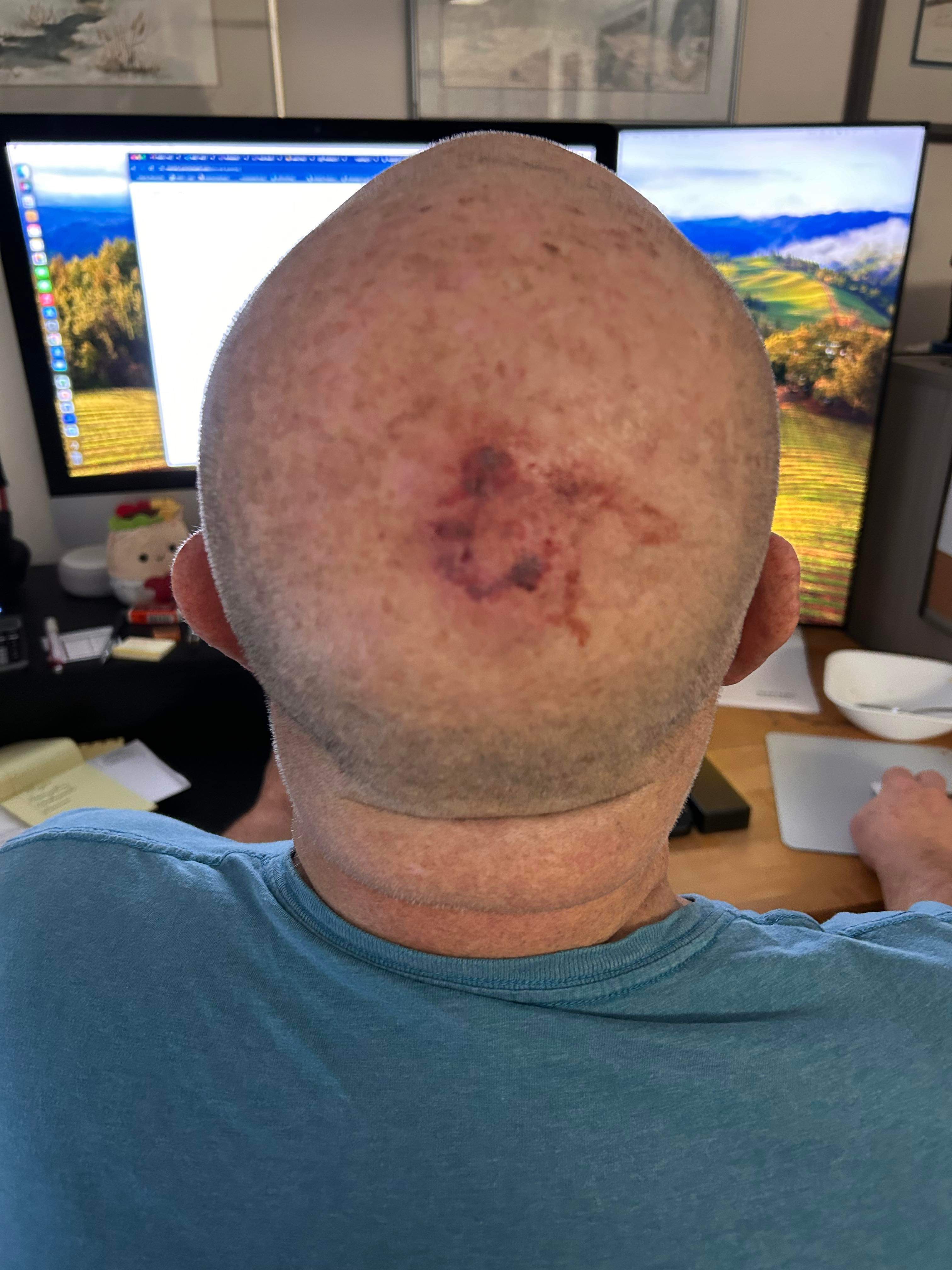
When T saw me later and noticed the blood on my head, she took me to urgent care which sent me to the hospital. I’d suffered a concussion and a compression fracture of my cervical vertebrae. I was to start on a blood thinner because of the high risk of stroke from my AFib but we had to delay that in case I had an issue with bleeding in my brain or neck.

I used to have a bias towards people with heart disease, I thought they brought it to themselves through lifestyle choices, and maybe they do. Maybe I brought my heart disease to me through my choices. There have been a lot of lessons in this.

The primary medicine that I’m on costs over $20,000 per month. My insurance company would pick up all but $3,659 per month but fortunately, my time in the army helps out to the point where this cost is not a concern. From being on few pills, so few that nurses often remarked how few, I’m now on pills to control my heartbeat, control my blood pressure, thin my blood so that I don’t throw off a blood clot, and on and on. I have a morning ritual of about 7 pills and an evening ritual of six pills.

This has been a grieving process.

When I cry, it’s not so much for me as it is for this precious vessel, my body, that has endured so much for me. When I cry, it’s because I know how much I’m going to miss T, my boys, and my family. I didn’t want to leave T alone.

I’m scraping by, but with all the medical procedures and pain it’s a struggle. I’ve got some fixed income but not nearly enough. I want to leave something good behind for the people who know me.

I’d like some help.

Age 70 isn’t young, but it isn’t 100.
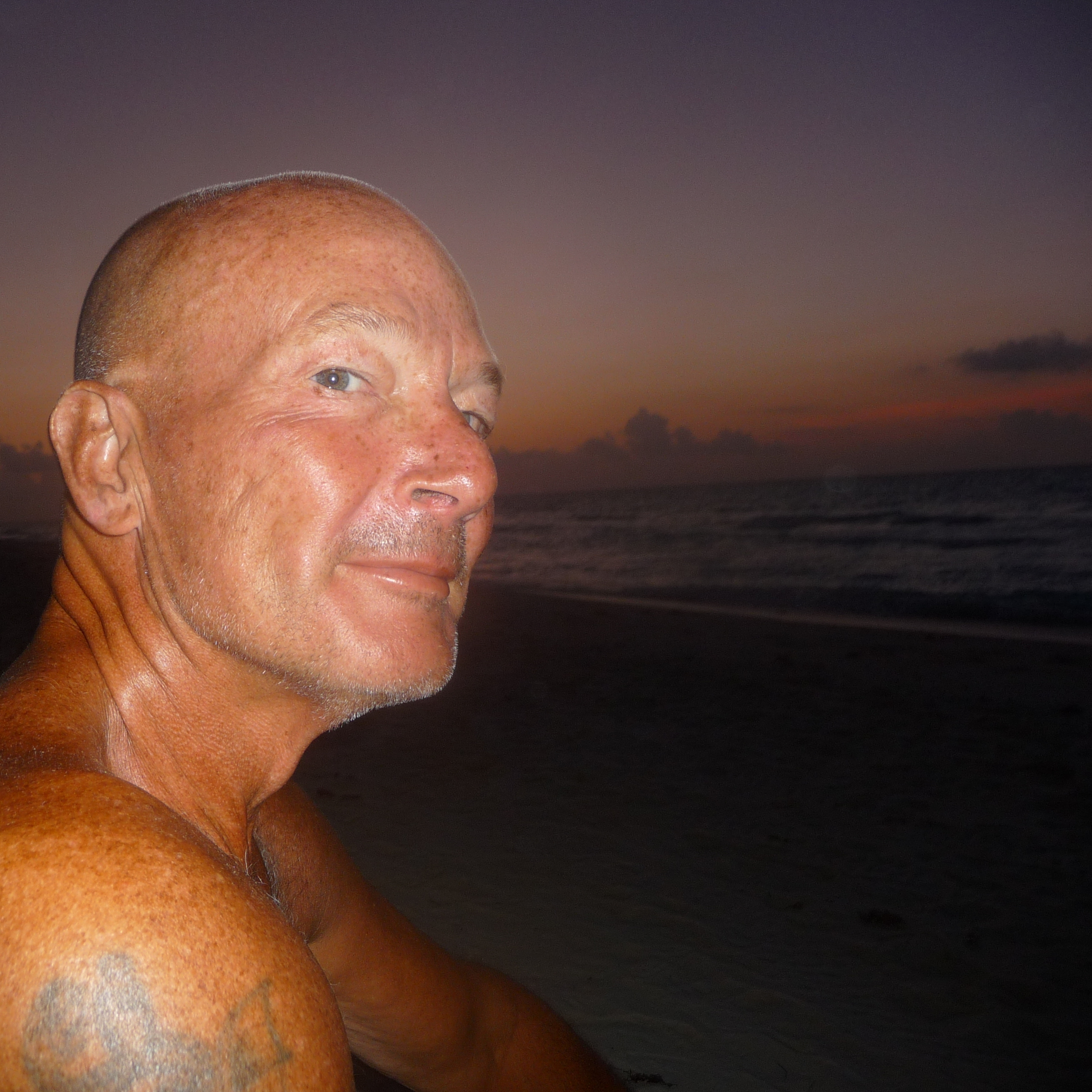
Thank you.

The Schneiders

I ran into my neighbor, Mr. Schneider, on my way out the door the other night. At eighty-eight years, he’s older than I am but seems to be doing well and he also seems to be a good fellow. We’ve had a few talks about whisky and family and dancing. He drives a van with a church bumper sticker on the front and regularly takes it out for a spin going who-knows-where but probably going to church and getting things to eat. He and the Mrs. are small people and can’t eat much, though I think he likes candy.

Last Halloween I opened my front door to check on the level of treats in the large wooden bowl I had sitting out there, and surprised him; catching him with his hand deep in the sweets, that guilty hand looking like a kid half-buried in those old ball-bowls at Chuck E. Cheese’s. We nodded.

Mrs. Schneider, who’s probably about the same age as her mate, had a medical event a while back and ended up in the hospital for nearly a month. Mr. Scheider would drive the 80-mile round trip every day to visit her. I knew he missed her, even more so when I met him at the mailbox one day and found him wearing a burgundy dress, complete with thin little bra straps showing at the shoulder. He wasn’t smiling and, as I said, I knew he was lonely. It’s a short walk to the mailbox and there’s not much exposure. We talked for a few minutes, neither one of us saying a thing about the obvious or unusual. 

He shuffles when he walks and it’s a very slow shuffle. He’s being careful and that makes good sense. When the snow and ice came, he made sure to use at least one hiking stick to steady himself, but he still shuffled. I’ve never seen him shuffle further than his car – except for the one time I ran into him at the Meijers. We talked that time also, but I’m not certain he knew who I was.

I took a walk a while back. I wore good, treaded boots and my long burgundy overcoat. I don’t shuffle but I like to think I take care. I should say that it was both snowy and icy out and that I don’t use a hiking stick. Coming to a road to cross, I checked both ways, saw no traffic, and started across. I woke up sometime later, flat on my back in the middle of the road, three or four cars stopped, forming a protective wall around me, and two or three people kneeled near me, asking if I was okay or if I needed help. I could see my glasses clearly, lying about ten feet away, too far to crawl but crystal clear as if the fall had sharpened my vision; a lady got them for me. Two guys helped me up and asked if I needed anything. In my mind, I said, “Yes, please, someone take me home.” Outwardly, I said, “No, but thanks for what you’ve done,” and I cut my walk short and shuffled back home.

I haven’t seen Mr. Schneider in a few days.

Mommy Issues

Most of us learn through relationships but if you have unresolved issues with your parents, don’t kill your partner; kill your parents, and I mean that metaphorically.

Hard Times

I am, by no means, an enlightened person.

I think it was Sketcho Shiva who said something along the lines that it’s human nature to want to attach a story to events thus creating an anchor that provides a sense of certainty in turbulent times. This is the foundation of a lot of religious dogma and belief. If something is not understood, create a story around that space to provide a sense of comfort.

We know that Trump has brought our society to a point where previously abnormal expression has been normalized. Part of the result of this is that fringe-thinkers, now more than ever, feel comfortable in making known their theories.

I have a friend who’s spent his life studying his soul and spirit. He considers himself highly evolved because of his effort. Today, he sees as expert persons with little credibility (if you really research their backgrounds) and sees as conspirators and liers persons who have spent their lives becoming experts in a field. Is that a contradiction?

In the face of highly detailed prose with characters and colored hats and world domination about billionaires needing more, I still subscribe to the thought that the simplest explanation is most often the correct explanation.

It’s a cliche but I observe in you, my friend, a certain smugness that comes from being confident in ingnorance. Of course, I doubt that I know what I’m talking about.

I am gathering a lot of material for my next novel. Thanks.


CBOC

It’s a brick and concrete structure, rectangular in shape and nondescript except for the drain spouts that add a touch of art when the water coming off the roof freezes and forms into icefalls. It’s not an ancient building yet not new, built over twenty years ago. The air inside is kept too cold in the summer and too hot in the winter. This winter’s been brutal with the chill so the moment I walk in, freezing from the weather outside, I’m struck with a wave of heat that in the first instant brings comfort but in the second nearly makes me ill. Straight off the entrance, the main hall is wide and half the length of a football field. I can see to the far end past the security desk where the green institutional doors with their push bars stand closed and locked. The thick frost on the far side of those door windows keeps me from seeing through to what stands beyond. The northern wall, to the right, is lined with short brown wooden partitions that are topped with glass dividers not unlike a bank that scrimped on fixtures. Behind the partitions are the scheduling desks facing inward towards the hall and behind those are more desks facing any way but inward. Clerks are stacked three deep in this narrow space. They each have a computer and a phone but there’s one line for every two phones so the incoming calls are squeezed and stacked into a queue. This design gives the front-line staff time to belong to the people standing before them, and the folks dialing in a chance to find their limit. The clerks rotate chairs throughout the day to avoid burnout but they gain a different kind of insanity.

Opposite the scheduling desks, through the doors on the southern wall, are Dental, Optical, Service Officers, the Patient Advocate, Lab and X-ray. Pharmacy has its own little waiting patch with an electric overhead sign that reads out numbers for the next in line. At the little space for the Volunteers there’s a cutout window and a ledge where they’ve placed donuts and cakes.

Veterans, some quiet – others talking, wheezing and coughing – are lined up to take the nourishment. Paper cups and pastries in hand, they turn and leave their heavy breath behind. For a few of the visitors this is the morning ritual, a visit to the clinic to chum with their friends and grab a cup and a bite to eat.

Every space between the desks and the doors on both sides of the hall is furnished with plastic chairs for people to sit in while they’re waiting. Even this early, those waiting outnumber the chairs. The system struggles, the crowd grows, and the warmth does too. It’s easy to tell that the clinic isn’t shaped to meet the burden that’s placed upon it.

On the floor there’s a strip of white tapeline across a length of blue indoor-outdoor carpet that lies parallel to the check-in desks. There’s a sign taped to a partition that reads, “Wait here for your turn.” Most of them are good at waiting, it’s part of what they know. If the spirit moves them, some will grow tired and step out of line. There’ll be a shoving match that might lead to a boxing match and one of them might go down for the count. Along with learning how to wait they learned how to fight and even if it was a long time ago it’s still a part of who they are.

Many of them wear symbols of fabric: A hat, a patch, or a shirt that shows where they’ve been or where they want you to think they’ve been. Sometimes, along with the cloth there are other symbols and if those markings don’t show where they’ve been, they show where they are.

I look back and notice a fat, disheveled guy in shorts. His pale legs show bright against the grayness of the day. He’s standing in the space between the entrance doors making his choice from the offerings in the vending machines. I think to myself, “It’s too wintry for bermudas; you’ll freeze your skin. No-one cares how tough you are,” just then realizing that his legs are prosthetic and it’s not the temperature that matters.

“Morning Ranger,” someone voices as I walk by – I nod back.

I turn to the right, pass through a door and make my way to the little cave of an office, locking the door behind me. With the door shut, the temperature in this room is amplified more than most. If it’s hot out there, it’s fiery in here. The room’s got two glass openings that face out somewhat like the entrance to a movie theater. The ledge beneath each is cut to allow vouchers and cash to be passed; they pass travel vouchers in, and I pass cash out to cover the cost. One window’s high for those who can stand and the other’s low for those who can’t. There’s a bag of dog biscuits near the low opening. I keep the lights off and the room dark while I answer the phone and direct the calls. Occasionally, someone comes to my window and asks a question or passes paper.

A young, fit man appears at my window. In his twenties, there’s an attractive woman of his age standing beside him. With an even, firm voice and no trace of emotion, yet not with a dead voice, not with despair nor the sound of depression, not as if he’s asleep, he asks me a question and takes my answer. His companion smiles and say’s something to him. I catch her name, “Annie”, as he answers her back. They turn and go. I think she must be cut from the same cloth as he; they seem similar and well matched. There’s something noble about him, and about her too. For a moment I wonder why he’s here – he looks whole. He walks away with a stiff rhythm. A prosthetic leg replaces the real one lost in battle or lost in error. I think to myself, “He bears it well; they bear it well.”

My mind drifts back to when I was his age, retreating to parts I left behind and pains I no longer ratify.

I did it for God and country, our way of life, my brothers-in-arms. I did it for myself. It wasn’t a good war, but it was the only war we had. It could have been worse. Others paid more. I knew the risk; I have the reward.

A week or two later, while walking the hall I spot them again, sitting in chairs, waiting. Annie’s smiling and leaning into him, saying something. He’s listening, sitting straight yet relaxed. I have the same reaction to them; their strength and their quality but now I can tell that they are cut from the same cloth, likely brother and sister. This time I notice that both of his legs are prosthetic.

This is the protocol. We offer them glory, immortality, a purpose, a job. Most of them served and survived before their brains finished growing and the experience stopped them something like an athlete who reached his peak in high school and never got past it. Killing is hard and better suited to the young for many reasons. Of the seven percent who served, one-fourth have seen combat. Combat or not, one feels bitter, cheated, deceived – the other proud, humbled, at peace – but whatever their feelings, they mingle here in the clinic. So we try to treat them for what we did to them and what they did to themselves.

Months later, the clinic is being moved to a new facility better suited for the greater numbers that the continuous wars have generated. The old building is being offered in service to another need. The doors are open as I walk in to pick up a few personal items. Workers move chosen pieces of furniture, equipment and medical records onto trucks to be taken to the new space. The inside temperature is in balance with the outside temperature as I pass through the entrance and look beyond the empty main hall, past the vacant security desk and the green institutional doors.

“You coming with us, Sarge?” someone asks.

“Maybe. What’s coming in here after we leave?”

“More of that,” he says, pointing with a thumb towards the space outside.

I follow his motion to the opening at the far end of the ward. Out there, on the gentle lawn, magnificent oak trees looking like giant soldiers stand guard above the grass covered fields. In the midst of a meadow dotted with the grave markers of the Michigan veteran dead, a fresh hole has been dug in the earth. There’s a ceremony taking place. After a pause, I recognize Annie standing next to a flag draped casket. It takes me a moment to understand.

“You with us, Sarge?”

I turn back the way I came, my eyes watering, and my skin flush with newfound shame.

Several clerks stop their labors and stare my way, curious to hear my answer.

Maybe the best we can do is give them a place to rest – these people cut from the same cloth.

“Yes,” I say, “I’m with you.”