Chapter 13 – Jewel


She (w)hore her sex on her sleeve.

El Hefe


Love the left. There are no bus stops on the left.  Lazy left. Bus back, bus butt.  Point rider.


              Bus driver boredom, “I’m going to see if I get up to 60 mph before the next light.”

              With two hundred and some drivers mixed from both genders, working all hours of the day and night, it became common for affairs of the heart to spring up, prompting his trainer to inform him that, “There’s a lot of love at The River.”

              She’d point out single women who she thought he should consider, not knowing his circumstances but assuming that he was unattached.                  

              There was one driver, at The River, who used to turn his bright beams on so that they’d reflect into the mirrors of vehicles in front of him, usually compelling them to pull further ahead so that the lights didn’t blind them.  He referred to this zone, which was created, as his Safety Bubble.             

              Back on the route 60, it was mostly kids and young adults getting on the bus.  The main campus was thirteen miles, or so, from the downtown campus and there were a lot more reasonably priced rentals in town than out there in the country where the primary school was, plus a lot of the kids still lived at home with their parents.  Some of the older kids were married and lived with their spouse and children in town, also.  Now and then a grad student or a professor would ride, and then there were people who knew the system and had nothing to do with the university who would catch a free ride just to go shopping or whatever; it saved them a $1.50 each way – they looked kind of guilty when they climbed aboard, especially if you were a new driver and they thought you might ask them for a school ID.  He never did ask them, figuring it didn’t cost the system anything, really.  After a few weeks or months of driving, drivers would make some “friends” or, at least, get to see some regulars. On Walter’s run, there was a lady professor who wasn’t that old, she appeared to be younger than he was, who had a stroke and needed special attention getting on and off.  There was a young woman who, he assumed, was a graduate teaching assistant or something similar.  She would ride almost every day, including weekends, and got on and off always at the same stops.  He imagined she was from Peru or some similar South American country.  She had a good but not spectacular figure, pleasant face and nice bouncy brunette hair.  At first she seemed extra friendly but later became just polite.  There was Mary who rode mostly on Wednesday and was in a wheelchair.  She got on near the YMCA, was very polite but seemed to be going downhill the more time passed; looked like she suffered from MS.  Some of the regulars were regularly indifferent or impersonal.  The one young girl who kind of glowed, who was always lighting up whenever she got on, was there that day and they said hello.

              “She’s so cute, full of life – just nice,” he thought, as always. 

              That day Walter thought, “She either doesn’t know about the illusion yet or she’s seen through it and found the miracle.” 

              She always made him smile when she climbed aboard.  She was dressed a little different that day, not quite hippy-like but definitely in her own style; the air she brought on board with her smelled fresh, her hair was dark and in curls and a little disheveled.  When Walter’s shift ended, he pulled in to the New Campus, as opposed to the Garage where he started his morning, and exchanged his bus for one of the shuttle vans that the relieving driver drove over to start her shift. 

              “How’s the bus?” she asked.

              “The brakes are a little loud and one of the advertising panels looks like it’s coming loose,” he had said.

              He’d let her know if anything was left on the bus by a passenger and if there had been any problems, in case some angry passenger or free-rider came back to haunt the new driver.  Sometimes they’d talk about union or contract news. The company gave the drivers fifteen minutes, or so, to drive the shuttle van back to the garage and drop off their time card, so there wasn’t a lot of time to waste.

              When Walter got the van back to the garage that day, he ran into some other drivers who had been in his training class whom he hadn’t seen in quite a while so he spent a little time talking with them, something he usually didn’t do.  By the time the conversations were done, Julie was coming in at the end of her run.  She dropped her time slip off at Dispatch and then walked directly over to Walter.

              “Hi,” she said.

              “Hello,” replied Walter.

              “Are you done for the day?” asked Julie.

              “Yep,” came his reply.

              “Want to get a beer?” she asked, “There’s a place I go to, over on Michigan.  That’s near you, isn’t it?

              Walter had to think about this for a minute, as you already know, there was a strong attraction between them.  She was a pretty woman, dark haired, probably about five foot five or six, nice figure through the clothes.  What he liked the most was her face.  He didn’t have the energy for a new relationship, especially not “one on the side”, and though he and Mara were no longer lovers, he did still love her and had no plans to leave her; and then there was Jade.

              “Okay,” he said, “What’s the name of the place?  I’ll just meet you there, if that’ll work for you.”

              “Sure. Great! It’s the Logan’s Ally,” she answered, “Do you know it?”

              “Yah.  I’ve never been inside but I drive by every day. I’ll head over as soon as I change, okay?” from Walter. 

              There was an exercise room with gender specific locker rooms and showers just down the hall from Dispatch.  Walter kept a change of clothes and a few other things in his locker.

              “Yes.  See you in a few,” she said, not smiling but there was a pleased look on her face. 

              Michigan Street was a good representation of River City, in general.  Coming from the direction of the bus garage, heading west to east, when Walter got near his destination he drove past the Selam Store that sold African food, then the American Legion North East Post No. 456, Duke’s bar, Farah’s Bar, The Lord’s Chapel, Howie’s Bar, Bob’s Sports Bar, Angellous where they sold Christian symbols, finally arriving at Logan’s Ally where the sign out front said, 7-11a.m. Happy Hour – that was their morning sign still standing on the sidewalk. 

              “We’re a little early or late,” he thought.

              He got there just a little after Julie and pulled up to the curb a few yards from the front door of the tavern and parked just behind a black Saturn Sky turbo with a custom license plate that read, “Jewels.”   In her mirror, she saw him pull up so she got out of her car and walked back to meet him as he stepped out of his.

              “Thanks for doing this,” she said, and grabbed his hand and pulled him through the front door of the establishment. 

              Inside it was dimly lit but no there was no smoke, like in the old days when he used to drink; the laws had changed things.  It was a pretty standard bar but had its own character; it had a painting of Abe Lincoln with the bar’s name stenciled on his stovepipe hat.   The bar ran along almost the entire length of the western wall, mirrors and glass shelves with bottles behind it.  To the left of the door, as you came in, there were two shuffleboard tables.   He noticed that there were no windows big enough for a person to go through, only a small glassed slit in the door and a window placed about seven feet up the wall measuring a foot on each side, that was in line with the street light out front and it let a little of that glow in.  Along the eastern wall there was a row of fixed tables divided from each other with wooden panels, making them fairly private on three sides.  Between the bar and the fixed tables there was a row of loose tables that could be pushed around to accommodate different sized parties.  The red neon sign over the hallway in the back left corner said, “Restrooms” and there was a swinging door, to the right, that looked to be where the kitchen entrance was.  The place wasn’t too wide but it was long and Walter guessed that there was room for around one hundred citizens and he figured it was about half full right as he got there.   He figured there had to be a back door to the outside somewhere in the kitchen area and, probably, an emergency alarmed exit somewhere past the toilets. 

              Julie, slightly in front of him, took a quick look around and then headed to the next to the last fixed table, the only one still empty, and grabbed a seat.  Walter sat down across from her where he could see anyone who came or went through the front door.  She looked nice; she had washed up a little bit and he could smell the soap, and she had changed into casual clothes, a fuscia colored t-shirt with a V-neck and jeans and sandals.  She was a woman who knew that she was beautiful but didn’t seem to care. Walter still had on his black Diesel boots and dark blue uniform pants but had taken off his white T-shirt and the burgundy uniform shirt he was driving in and now had on a turquoise short-sleeved pullover. 

              They each ordered a beer, Sixpoint Craft Ales, the Bengali Tiger, which had citrus and grapefruit, for her and the Resin, which was a balanced summer brew, for him, and began talking.  Walter used to have an almost insatiable curiosity about people, especially beautiful women, which kept him asking questions, trying to find out about their early life and experiences, wanting to understand what made them tick.  Now, he hardly talked and couldn’t really care less about the past or what made most anyone tick, he just appreciated the moment; it made him quiet.  This silence, on his part, came across as confidence and made him more attractive to most women when, in fact, it was just symptom of his ambivalence.  Confidence, or the lack of it, never entered the equation for Walter. 

              “You’re gorgeous,” thought Walter, and then he asked, “How was your route today?”

              “The usual,” she said, “It’s just a job that pays better than most. Let’s not talk about work.”

              “Is Jewels your real name?” he asked.

              “Sometimes,” she answered, “My family calls me that, and a few good friends, too; for different reasons, I think.  If you know me long enough, you might call me that.  Call me whatever you want.”

              “Heaven on Earth,” he thought but kept it to himself. 

              Their beers arrived and they toasted each other and took a drink.  The liquid was cold and went down smoothly.  He watched her lips on the bottle, her neck as she took the fluid in, a closer look at the fingers on her right hand holding the bottle, her eyelids as she half closed them, tilting her head back slightly.  There was hardness about her. 

              “She wasn’t always this tough;” he thought to himself, “too pretty for that, almost flawless. Life got to her.  She seems to be handling it well.”

              Just as he was finishing his thought, a flash of light went through the bar.  He was aware of it and thought, “Must have been something outside on the street.”

              “Do you run?  You know, jog?” he asked her getting that out of the way.

              “No way,” she said.

              She asked him a few questions.  He deflected, but was charming in doing so. 

              He countered and it opened the floodgates.  She grew up in Detroit and married her high school sweetheart.  He held a blue-collar job but made good money and she didn’t have to work outside of the home.  He also drank and ran around.  She had two kids with him; they were now in their early twenties and lived in Detroit, about three hours away.  She’d see them, usually, about once a month and talk with them several times a week.  She left her husband more because of the physical beatings than the emotional ones and she was still a little bitter about her collapsed dreams but knew it.  Her father left her mother when Julie was in her teens.  Her mother remarried and Julie became very close to her stepdad until recently.  She worshiped her mother and had nothing to do with her biological father because of his leaving.  Her mother died less than two years ago and she got teary when she talked about her.  He stepfather had already found a new girlfriend and Julie was upset about that; it was too soon.  She was a Christian and wanted to be a writer of children’s books and write about Jesus; she threw in a little religious talk as she went along but not too much.  She knew that her mom was watching down over her.  She took her mother to Mexico in the year before she died and they met an older man, younger than her mother but not by much, while they were there and Julie married him within six months of their return to the U.S.  He lived in Illinois and she moved there to be with him.  She welcomed the sex, found older men attractive, but found out that he was a liar and dishonest so she left him before a year was up. His fishing boat was still parked outside her home and he wouldn’t come pick it up even though she’d called him and written to him about it.  She wanted to sell it but the title was still in his name so she didn’t know what to do.    

              Walter was still thinking that she was beautiful but started smiling to himself, as she talked, and thought, “I love life.  The Universe makes things so interesting!”

              She then explained to Walter, somewhat hesitantly, how her neighbor is a sixty-five year old black man who was caring for his daughter’s two-year-old child while his daughter was in jail.  Julie had fallen in love with the child and, then, with the grandfather and had confessed to him and they had become lovers but she just found out he was cheating on her and she didn’t know what to do.

              Walter said, “Sixty-five?” 

              And “cheating on her?” was his thought.

              “I like older men.  They’re wise and nice,” was her response. 

              Julie went on to tell him how between marriages she met this guy, another black man, in this very bar and they became lovers.  He moved in with her and things were fine until, one night, he kind of had a psychotic break and started trashing her place, breaking the furniture; he threw her on the bed and raped her, breaking her ribs in the process.  From their conversations, she knew that he was wanted in Minnesota so she turned him in and got him arrested and he was doing time there.   He kept calling her, from prison, even though she got a restraining order against him.  He was to get out in six days and she was worried that he’d come back for her.

              Walter started to understand their meeting. 

              “How old is he?”

              “He’s younger, about your age,” she said.

              “Are you still afraid of him?” asked Walter.

              “Yes,” she kind of whispered.

              “Do you own a gun?” from Walter.

              “Not anymore,” was her response, “I used to keep one around the house but he found it and started shooting things, just to see if he could hit them, so I got rid of it.”

              “What kind of things would he shoot?” asked Walter.

              “Birds, bottles, a cat, anything that got left around in the yard.”

              They were hungry so they waved down the barmaid and ordered from the menu, which was tucked behind the napkin holder on their table.  They agreed to split the Garden Quesadilla; it sounded good:  Grilled Red Onions, Succulent Sundried Tomatoes, Fresh Spinach and Portabella Mushrooms, all tucked into a Flour Tortilla with a Special Herbed Goat Cheese Spread and side of House Salsa.  They could add meat but she was happy without it and Walter preferred not to eat anything that once had a face; he also preferred corn tortillas but they were hard to come by in restaurants.  They each ordered another beer, changing to the Righteous Ale, dry-hopped with herbal and citrus hops, for Julie and the Sweet Action, which was touted as being hard to define, for Walter.  He was thinking how she could be his sweet action but he was getting the sense that she wanted another kind of action from him.

              When the food came, things went silent.  As they’d done with their first beers, they each took a taste of the other’s then agreed that the Tiger was the one they liked best.  They talked about leaving so she got up to pee and a wave of fresh air followed her.  Walter took a look around the place and thought he saw a familiar face on a person just before he walked out of the front door but couldn’t be sure.  Julie came back and, just after she did, a girl in her early twenties walked up to her and asked her if she’d play a game of shuffleboard with her. 

              Julie smiled and turned to Walter and asked, “Do you mind?”

              “Go right ahead,” he answered with his own smile.

              While she was playing, Walter got up and went to the bar to pay the tab and talk with the bartender and another patron until she finished. 

              About a half-hour later Julie walked up to him, took his hand, and told him, “This happens all the time.”

              Out front, they kissed. 

              She said, “This was nice,” and then, “What do you think I should do about my problem?”

              Walter thought, “Which one?” but said, “Let me think about it.”

              She said, so quiet that he almost couldn’t hear it, “I prefer the cock to the puss,” and then walked off to her car.

              Watching her walk away, he smiled and thought how perfect life was.

              “This… Here… Now – Breathe In… Breath Out,” Walter practiced.

              He turned around, headed the few feet back to his car, when there was that flash of light, again, the one he’d seen through the window in the bar.  There was nothing he could see to assign the light to.  He was putting the key into the lock on the car door when he heard something behind him.  He turned the key, unlocking the door, and then pulled the key back out and held it between his index and middle finger on his right hand, key fob inside his fist, key shank pointing out like a knife, and then he turned around.

              “Hey Friend,” said the wiry guy who had just stepped off of the curb and into the street, coming from the opposite side. 

              He was smaller than Walter but looked to be all muscle, kind of greasy, with hair too long and uncut, a Detroit Tigers jacket on, left hand out and reaching towards Walter, right hand still in his pocket, unblemished white Nikes on his feet.

              “What’s up Sport?” asked Walter, thinking the name fit.

              “How you doing?” came the response, the man still approaching, walking faster.

              Walter started to move, turning slightly, reaching for the handle on his car.

              “No, hey, no.  How you doing?” said Sport, moving faster, not yet running but within three steps from Walter.

              There was that flash again. The guy was moving his hand in his pocket.    Walter saw the butt of something extending just past Sport’s right hand as it started out of the pocket, but couldn’t tell if it was part of a knife or a gun.  Whatever was in the pocket got stuck on the fabric. The delay was just for a second but that was all Walter needed. As Sport took one more step towards him, Walter also took a quick forward step, closing the gap and bringing him within combat range; he swung his left hand wide and around and, with an open palm, slapped the guy’s right ear, knocking the attached head sideways and bursting the eardrum.  As the shock of that took effect and Sport stopped his attack, Walter pulled back his left hand, as if he were swimming, pushing his body forward in the process, pivoting on his feet and legs, shifting his body weight, and struck the lump, or laryngeal prominence, at the front of Sport’s neck, crushing his vocal folds, injuring his laryngeal nerve, triggering the closure of his trachea, and dumping him backwards onto his butt in the middle of Michigan Street.


                  “The key to survival in combat is violence without hesitation; total, no holding back, and then, if wounded, it’s presence of mind rather than slipping into shock,” Walter remembered the instructor saying, a former pro-football player, standing in the depression in the middle of the Georgia woods, bare chested, K-bar strapped to his waste, holding a chicken above him, drinking the blood as it pumped out, having just bitten its head off.


              Walter turned and saw Jewel’s car just turning the corner two blocks away.  A thin, hard rain was just beginning to fall, carrying on from where it had left off the night before.  He got in his car and drove the mile to Mara’s house in the time it took Sport to suffocate.


Chapter 12 – Common World

Alex, “If she was dead, I would be crying.”

You have to be alert when you ride an elephant, you can do a lot of damage if you screw up. Alertness takes energy, it activates a person and it tires one out. Awareness, on the other hand, is something one falls into and it can both relax and rejuvenate the person. Driving during the day, it was easy to hit or rub curbs with the rear tires of the bus. The drivers said that the curbs absorbed heat from the sun and would expand at the same time that the air within the tires heated and expanded, and the result was more rubs and curbs happening in the day than early in the morning or later in the night.

That day, it was foggy out.

“Froggy,” he remembered thinking and imagined a bunch of tiny amphibs in the air. The day was cool and the expansion excuse wouldn’t fly if he rubbed.

It was really a matter of professionalism; the better drivers made clean turns. Walter made a right turn around a sharp corner and came up just short of a car stopped at the signal light on the street he was turning on to. He needed her to back up so he could complete the turn. The buses don’t back unless it’s an emergency and the one time Walter had to, a passenger had hopped off to make sure it was clear behind him. The woman at the wheel of the car looked to be reading a text message on her phone while the few cars behind her had already backed up, making room for the bus, and the signal light turned green before she finally looked up. From his vantage point above her, Walter saw how startled she was, this massive thing sitting just outside her windshield. After her initial shock, she gave him the old Stink Eye, turned to her right and drove on by. Walter kept his poker face on but was laughing inside. He completed his turn and remembered to “beware of the flare” as he did so, not wanting to sideswipe any cars as his rear swung out.

A few blocks later, he pulled to a stop and picked up a pretty, young mother with her kids in tow. She had a wholesome look about her but, obviously, wasn’t wearing a bra and the T-shirt she had on was imprinted with a goofy cat with its eyes positioned over her erect nipples. It took Walter an instant to realize he was staring but the way she smiled suggested her plan was working. She rode the bus for twenty blocks before she and her kids got off but not before she provoked him further.

She looked at him that way, you know, whether you’re male or female you understand; the way that say’s she wants you, and then she called his name, “Bus Driver.”

He got a chuckle out of that.

That day, driving home, Walter’s mind brought up traces of his trip, with Mara, to Big Sir and Monterey and how sweet it was but, also, how it defined what they were to become.

On that trip she was still sexual, still got wet with anticipation. They had entered the personal sanctuary that was Esalen and showered with others in the shower that was perched on the cliffs over the Pacific Ocean and then moved to the stone tubs filled with hot spring water that flowed from the mountains behind. That first evening, there were several other bathers in the tubs but Walter and Mara experimented, moving into a hot stone bath until heated and relaxed and then cooling in the claw foot bathtubs before moving to a new hot bath and so on, repeating the process until they were pleasantly exhausted. Some of the other bathers were silent while others engaged in mild conversation.

“I just don’t understand what women want!” said a man who looked to be in his seventies. He was naked amid five or six naked others, near him in age, both men and women.

As the hot water cooled and flowed out of the tubs, they would pull the large wooden stoppers from the rock channel behind them and refill the tubs with 119-degree water. Looking out towards the horizon of the ocean, they could see the spouts of gray whales as they migrated north, back to their breeding grounds. Below them, sea otters floated on their backs in the waves and cracked open the shells of mollusks they’d retrieved from the ocean floor.

He was remembering how Mara had turned her back to him and leaned her naked body half way up on the stone ledge to get a better view of the otters below. He sat there, blissful, sweating and at ease while her body rose out of the water. He saw her little shoulders, a strong back with a well-defined spine and just below her waistline, two cute dimples that gave emphasis to the perfect heart-shaped ass below.

It was a long winding uphill path from the baths back to their cabin but the walk was peaceful. The green hillside around them was dotted in some spots and completely covered, in others, with yellow flowers. They could see the white surf crashing against the rocks at the shore.

In the cabin, there wasn’t anything she wouldn’t try or do to please him, to please herself. She stripped her clothes off and laid down on the floor, spread her legs and rolled over, showing her pussy and her ass. She did a headstand letting her large milky breasts fall towards her face. She gave him a flirty look, humor in her eyes that made him smile then. Remembering, he was smiling now. They made love. Afterwards, she drank a full bottle of wine taken from the case she’d picked up at Trader Joe’s in Monterey.

“I see a rabbit,” she said, looking up at the patterns in the knots and grain of the wooden ceiling above them.

“There’s a butterfly,” he said, pointing with his finger.

“Don’t live in the past,” he told himself, that day driving the bus.

That afternoon, after his workday was done, he had headed out in her back yard to look for her. Around him, the air had been close as he walked out to find her in her garden, surrounded by flowering plants in various stages of coming and going. She was clipping the flowered heads from the top of the basil plants growing in her raised beds.

It had been another perfect time of year. The purple tulips, pink, fuscia and white peonies, and pink and white bleeding hearts had passed their prime and were fading while the flowers of the lilac bush were completely gone, leaving the healthy green bush behind. Emerging from the lavender and green base of Russian Sage, abundant small red roses were climbing over the white bricks at the back of the garage, leveraging off of the trellis and reaching for the roof gutter.

She sat back, when she saw him, and he moved towards her. As he approached, first one and then a second Black Swallowtail butterfly landed on her shoulder and back. She didn’t seem to notice their arrival but, at seeing this, Walter had smiled inside. Ringo, their big grey Maine Coon, the one he’d given her to keep her from loneliness before he moved in, left her side and ran up to him for some head rubs.

“Hello Ringo Bear!” he had said, “How you doing Dog Hunter?”

“Hello,” said the big cat, with a smile in his eyes. Of the four cats living there, he was the only one who spoke English.

Walter remembered how things seemed almost unreal and how he quickly lost and then regained his balance looking at her, seeing her form framed by a kaleidoscope of colors and natural beauty, the tall yellow sunflowers rising above and behind her, the yellow and orange Nasturtiums spilling over the garden-bed frame at her side, white and purple Clematis dressing the wooden fence, fading clusters of Valerian and Honeysuckle, Foxglove, purple Allium and bright Firecracker Begonia, Hibiscus, and purple and white Iris, chartreuse Kiwi Vine in an array.

Shakti, her white and gray cat, the quiet killer, was resting on a branch at human eyelevel in the corkscrew willow, legs and paws hanging in the air below her, positioned in a spot where she could watch over Mara. Zoë, the nervous Tortie with beautiful camouflaged fir, lay on a cushion in a patio chair, trying to decide whether to move or sleep.

“Hey ZoZo” he had said, “You being good?”

She had a few trust issues that made her mean. Shiva would be inside sleeping, he knew, saving his energy until the darkness of night came. Walter had leaned down and given Mara a kiss.

“How was your day?” she had asked.

“So, so. I had a rolling incident. A fight broke out while I was driving and they stayed at it for about three blocks until we reached the next stop,” he reported.

She had just smiled at that.

“Want some food?” he’d asked.

“Sure.”

“You stay here and I’ll make us something to eat and meet you on the patio,” suggested Walter.

He had gone inside, through the breezeway and into the kitchen. He pulled the container out of the refrigerator and poured them each a bowl of gazpacho that she’d recently made from the harvest of her garden: Tomatoes, peppers, onions, cilantro and cucumbers; olive oil and vinegar from the market. He toasted two pieces of six-grain bread from their favorite bakery, brushed on some olive oil, poured two glasses of cool filtered water, placed everything on a tray and walked back out to the patio and parceled out the food, placing it on the table between the chairs.

“Hey! It’s ready,” he’d yelled.

She’d come over, ducking under the hanging branches of the willow, being followed by Ringo. Zoë jumped off her chair and gave it to Walter. Shakti remained in the tree, unmoved except for the turn of her head so that she could watch the two of them. They sat and talked and watched as the Common Yellowthroat, Song Sparrows and Nuthatches came and went from the feeders and sunflowers. Shakti watched the birds with indifference. Zoë made an involuntary chirping sound and speed walked, at a crouch, nearer to the feeders. Their backyard revelry ended as the sky darkened and it began to rain, moving both humans and Gatos inside.

Around her house, Mara had statutes of the Buddha, Angels, The Virgin Mary and Jesus, Ganesha, Sara Swati and Murugan. She worshiped no idols but she liked the looks of those images. She had silk tapestries, paintings and prints hanging from the walls or leaned against them and resting on the floors. Most of these works were amazing to him, having been done by old friends, her sister Jade, or by Mara herself. Among the finest etchings were ones done by her friend, Karen Sharon McNaren, who’d also been abused as a child, and as a young adult had abandoned her home, given away all of her possessions and moved far away where she took up the life of a prostitute. One hall was lined with black and white nude photos of Mara and Lizzy near water, faces turned and obscured. Beyond those prints, there were few photos, other than some small, framed pictures of Papaji, Gangaji, Sri Ramana Maharshi, and Adyashanti. When Walter had first met her, he thought these were pictures of her family and boyfriend and in a certain way they were. She did have one picture taken of her mother at an early age, framed and standing on the mantle of her fireplace right next to the urn that held Mara’s share of her ashes. Mara had a room at the back of her house, across the hall from her bedroom, where she kept things. Walter knew that’s where she kept her stash of booze, some paperwork, her wireless printer, and some clothes but he also figured that’s where she kept some of her secrets. As their relationship had gone along, and as Walter’s spirit had started to come back, she would frequently disappear into that room and come out with a book in hand.

“Here, you should read this,” she’d say.

He never questioned her. He’d take the book and, without a single exception, he’d find the answers to the questions his mind was asking, clearly spelled out in the book. Over the course of the time that he knew her, she had always given him the right book at the right time, never one out of sequence. There was, as the saying goes, a method to her madness. Had she given him too advanced a book too early, he might have given up, confused, frustrated or bored. Walter had devoured each book and followed every pointer she had given him and often he’d go to her in a state of excitement to thank her and tell her what he’d learned.

“Oh, that was just perfect! I feel like such a child. This stuff’s been around for thousands of years and I’m, just now, discovering it,” spewed Walter, “Thank you.”

“You’re welcome,” she’d say.

Walter would start talking, babbling about what he thought he’d just learned from the book she’d given him, but she’d stop him with a simple line.

“It’s all bullshit,” she’d say, and she wouldn’t talk any further.

There were times when she’d be sitting in her chair, drunk, working on some jewelry perhaps, and Walter would be across the room, talking about his depression or his latest crisis of faith and she would blurt out a single line of wisdom that would seem so clear that he’d stop and be silent and wonder what had just happened. She was the most messed up person that he’d ever known, in pain, suffering, making poor choices, unable to make decisions, attached, insecure, suicidal, and yet the wisest person he’d ever known. Walter couldn’t tell if she was ill or just messed up from the alcohol and meds. He couldn’t tell if she needed help, or if she was dancing at the edge of the Void and should be left alone to awaken.

He remembers how, the night before, he had awakened to find her gone from the bed, which wasn’t unusual except that she usually returned within a few minutes, taking that time to sit in the dark in her chair outside on her patio, smoking a cigarette with her cats milling around her. She’d usually finish the smoke, come back in locking the doors behind her, pee, gargle some mouthwash, and then come back to bed. That night, when she wasn’t back in twenty minutes, Walter got up to look for her and found her standing in the nude, bent over the broken frame and glass of a picture she had leaned against the wall in the breezeway. Her motions were stiff and abbreviated and her speech was slurred, as if she’d had a stroke. He noticed no cuts or blood on her skin and gently took her arm and talked to her calmly, soothing her until he could get her back into bed. After she’d fallen asleep, he’d returned to the breezeway to clean up the mess. He had made a promise to her, all those years ago, but worried now that in keeping his promise it might cost her life.

Back when they were still lovers, she had pleaded, “Please, don’t ever let them commit me.”

“I won’t,” he solemnly replied after a moment of thought that brought the realization of what his commitment meant.

Those years later, as he was cleaning up the broken glass he realized he hadn’t fully understood what his promise would mean. On the way back in through the kitchen, as he dumped the glass shards in the garbage can, he knew that he needed to make some notes. He found one of her pens; all of her pens were made to look like flowers, she used clothespins with sunflowers attached to seal food packages, and a note pad and wrote down some thoughts that he’d discuss over the phone with Jade as soon as he could.

It was a few weeks later, when he was exhausted and near his breaking point, that they convinced her to check into a rehab facility to try to get her meds regulated and quit the booze. Walter had talked with Jade and they’d agreed on a strategy to persuade her to take this step and it had worked, each of them having encouraging and supportive conversations with her, appealing to the part of her that still saw the sun and still felt joy at being alive and engaged. Mara made it through ten of the fourteen days the program required before checking herself out against medical advice. She tried again in a year or so. Each time Walter was encouraged and hoped for the best. Each time she started back on her path, hiding the bottles and limiting her drinking until the alcohol took control once again.

Jade had screamed at him once after one of Mara’s relapses, “You told me she was doing okay! You lied to me!”

Perhaps he had. Perhaps he had lied to himself also.

On the days when Mara would feel well, when she was sober and not overmedicated, they would talk.

“Are you glad you’re alive?” Walter would ask.

“Yes, when I feel like this,” she’d say.

Time would pass and she would always come back to the point of again thinking of killing herself. She did research on the Internet. She ordered books that gave clear instructions of the best way to do it. She dwelled on it. Sometimes, she’d be sitting in her chair across the room from Walter and she would lift her head and reach her hand up and with one finger representing a knife, she’d draw it across her throat.

Mara’s brother, Sam, couldn’t talk about it. Walter didn’t know if he was too emotional or if he just didn’t care. Sam would come over to Mara’s place to borrow some peat moss, or drop off some panties that didn’t fit his girlfriend, or to see the cats but he’d hardly talk to his sister and would seldom, if ever, ask her how she was doing. Walter talked over the phone with Jade about it until Jade’s marriage fell apart and she felt like he was taking advantage of her in her time of weakness and, again, perhaps he was. He needed someone to talk to, someone to love him since he didn’t know enough to love himself. He walked around, often trembling, waiting for the other shoe to drop.

Chapter 7 – Garage

Chapter 7 – Garage

Get mad, then get over it.

Colin Powell

It was a Saturday and early, earlier than he’d ever been to the garage before but he was covering for another driver and needed to start his shift at 4:45 a.m. For some reason, Walter parked his car on the street that day, rather than under the garage where the employee parking was.  It was humid, already making him sweat, but there was no rain and the forecast on his iPhone called for a clear day that day.  The birds were up; he could see a murmurtion of European Starlings strutting on a ledge that was lit up by one of the outside security lamps.  A block away, a freight train was making its slow pass through the industrial part of town, steel wheels on iron tracks, a distant flashing of the crossing lights and their warning sound.  He had walked around the block, just to loosen up his legs and back before driving, and had passed by the Tea Roses and Wavy-leaved Asters that were planted around the building, and was entering the garage through one of the bus doors that hadn’t been closed. He saw himself in the large round mirror the drivers used to make a safe entry into the garage, and noticed some people inside. When he rounded the corner, he could see four of the bigger Union Stewards milling around with Lee, the Union President, and Brady, the Operations Manager and some guy lying on the cement floor of the garage.

The cement next to the guy had a water puddle on it, “Probably from the night crew washing the elephants” thought Walter.

Brady and Lee were big guys and the guy on the ground looked to be pretty big too, but Walter could tell he’d been injured.  From what he saw, Walter knew what was going on and he knew that at least part of Union and Management were in it together, he just didn’t know why, specifically.

When they saw him, the stewards turned towards him in warning, Lee said, “What the fuck!” and hit the injured guy with a tire iron hard enough to burst his skull and, obviously, killed him.

Nobody said anything until Lee, breathing heavily and still holding the tire iron in his right hand, wiped his face and said, “Get it out of here and clean this mess up;” “It” being the dead guy.

Two of the stewards moved to pick the body up and carry it somewhere while a third went to get a bucket and mop; the fourth steward stood staring at Walter and said something to Lee.

Walter noticed that the automatic ceiling windows were open and he caught a glimpse of the sky and some birds, “Probably Tree Swallows” he figured.

Lee turned, stared at Walter, and then walked over to him.

“You’re in early, Walt” he said to Walter.

“Yep,” said Walter, and then, “It’s Walter,” he corrected.

That seemed to piss Lee off.  They stood there, silent for a few moments, and then Lee made a mistake.

He said, to Walter, “You say anything about this to anyone and you and everyone you hold dear will be dead!  You understand?”

Walter said back to Lee, “Just so we’re clear.  You’re threatening to kill me and everyone I hold dear if I ever say anything about what I just witnessed, right?”

“Right…Walter,” said Lee.

“I understand,” said Walter.

Walter didn’t know who just got killed.  He didn’t know why they killed him.  He couldn’t say if it was a just kill or unjust, who was right and who was wrong.  He did know that what had just happened was as old as mankind; that insanity ran rampant in the world.  What he also knew was that survival was the second law and that his survival had, once again, been threatened.  He walked around Lee, around Brady and the steward, over to the security door where he swiped his ID/keycard and went in to Dispatch, not upset, not panicked, just normal Walter.  He checked his wristwatch against the clock in Dispatch, adjusting his watch by half-a-minute, knowing that the Dispatch clock synchronized the universe.

He looked up his bus number; it was 256…Gypsy, filled in his timecard, and got ready to drive.

When Walter returned to the garage to Pretrip the bus, the gang was gone and there was no sign that anything untoward had happened; the wet spot where they had mopped up could have been elephant droppings.  He pulled his assigned bus out of the garage and turned left instead of right as he usually did.  The operators were trained on all of the routes and had printed schedules, called Paddles, which detailed the bus stops that had time points attached.  It was a standing joke that no driver wanted to be on The River without a Paddle.  In Dispatch, there was a bulletin board, as well as placards standing around, that reflected road construction and any detours or route changes that were in effect.   He had driven this route before and had covered for the regular driver a couple of times in the last two months.  When he turned up College Street in the dark of the predawn hours, he saw the same guy he’d seen every time, riding on a skate board, rolling along on the shoulder of the road going against traffic. He pulled up to the stop at Bricker and Western Ave., carrying six passengers; it was 5:45 a.m. and he had to wait until six to depart.  He flipped the switch for his four-way flashers, pulled on the air brake, shifted into neutral, kneeled and opened the doors.  A half-block in front of him, the usual helmeted, bearded guy on the bike, white front light on, red tail light flashing, lunch box strapped to the rack over his rear tire, wove his way towards the bus, looking forward and then back over his shoulder, half wobbling as he did so, and then crossing over to the right side of the road before passing by the bus.

“Probably on his way to work,” thought Walter.

A car pulled up and let off the cute Latino high school girl who was always there.  She got on, inserting her student 10-ride into the fare-box as she faced him.

“Good morning!”

“Good morning,” she echoed before retrieving her ticket and walking back to sit by her boyfriend in the seat just beyond the rear exit.

Another rider stepped on and said, “I lost my pass and don’t have any change.  Can I still ride?  I’m telling you the truth.”

Walter smiled slightly and said, “Sure”.  There was no point in having an empty bus.

The Avail system signaled that it was time to move on so he went through his routine, closing, lifting, shifting, checking and then moving, on towards the next stop.

He thought about the last time he drove past this spot.  A guy with a broken-down shotgun in his bag had gotten on.  The other passengers noticed that something was weird and one of them alerted Walter as she exited.  He had pressed the silent alarm and then received a call, from Dispatch, telling him to pull over and tell the passengers that there was a mechanical issue.   He did so, then stepped off of the bus, walked around to the rear and opened the engine panel.  A moment later, two city police cruisers pulled up and the officers got specifics from Walter before boarding the bus, handguns drawn, and arresting the gunman.  It turned out that he was on his way to see his ex-wife who was demanding an extra $10 per month in child support.  That demand had pushed him over the edge.  Walter had thought how some marriages are like benzene; they never degrade and when you take them on you assume responsibility for them for eternity.  With that incident, he had fallen fifteen minutes behind schedule and Dispatch wanted him to “put his foot in it” but he hadn’t; he had just driven at the speed limit trusting that he would catch up, not caring too much if he didn’t.  He was the boss of the bus.

The sun had started to make its appearance and the passengers took that as a sign to start chatting amongst themselves.  Sometimes it was good entertainment.

“I was raised Baptist but married Catholic so I was always either the world’s worst Baptist or the world’s worst Catholic.  There was a certain comfort in that,” one man had said to another.

“I’ve got money coming out of my floorboards at home,” he heard the guy, who he’d let ride for free, say.

At the next stoplight, one of the River Supervisor vehicles, a shiny new SUV, passed through, the driver nodded to Walter, Walter nodded back.  The light turned green and the bus moved on.

It was still very early but, in that town, the drinking started even earlier.  At the next stop three drunks started to get on, arguing over who would board first.

“You got room?” one of them had asked, “Can he get on first?”

“There’s no boarding order,” said Walter, “just get on.”

“People don’t seem to understand that there’s always room on my bus,” Walter had thought, laughing to himself.

He had gauged how rowdy they might be, knowing that, as a general rule, he should lock the belligerent people out of the bus, not in.  The River wanted the drunks to ride rather than having them drive their own cars and cause an accident.  Walter agreed.  If they were jerks, he knew they’d get off before he did.  Everyone was just trying to roll down the road.

At the next stop, one woman swiped her ticket and then turned sideways and stood as close to Walter as she could, separated from him only by the arm of the driver’s seat, as the other passengers paid and moved on to seats.  She was sexy with a cute face and body but she was missing some teeth and her skin was the color of death.

“Probably a heavy smoker and well on her way out,” he had thought.

He had seen her before, on some of the other routes, but that was the first time she had stood by him like that. She just talked to him for a moment, nicely, saying hello and asking how he was going, wondering if he was happy.

“You’ll have to move behind the yellow line so we can move” he had said to her.

She didn’t say anything but had moved behind the line and then leaned against the bulkhead, behind him, as he started moving again.

He got to his turn-around point and followed a loop of road through the parking lot of a library.  A woman came out of the building, saw the bus as it approached and ran until she got just off of the curb and into the crosswalk in front of Walter.  She made certain that she had eye contact with him and then she had slowed her pace to a deliberate walk, making him stop the bus to let her pass.

“Why do they do that?” the sexy, toothless one behind him had asked.  He’d forgotten she was there.

“I don’t know,” said Walter, “Maybe they’re just impatient and think the bus will slow them down.”

“Or maybe they know The River has deep pockets,” she had said.

He called that move the Suicide Trot.  Surely they knew what would happen between a body and a bus if the driver didn’t see them.

Walter had started back on the fast part of the route, heading back in to Central Station.  As Gypsy picked up speed, she had started making her Cicada sound.  Walter wondered if Maintenance would ever fix whatever was loose inside her frame.  When he reached the speed limit, there had been a bright flash, as if a mirror had reflected the sun light into the bus, and Walter had seen an image reflected in the windshield.  It looked like a frizzy red haired woman, wearing an eye patch and standing right where the sexy, toothless one was.  He looked up to his inside mirror and had seen neither the eye patch woman nor the toothless one.  There was nobody standing behind him where the reflection would have come from and where there had been a passenger just a moment before.

“Phew…must be losing it,” Walter had muttered to himself.

On the run in, there were mailboxes planted close to the road, often with their doors open and hanging out past the curb right where the traffic is heaviest.  The powerline poles leaned out over the road, also, and some wise person planted the road signs closer to the street than the city ordinance allowed.

“Love the left”, passed through his head, remembering what Marti always advised.

Walter followed behind a dump truck that was dropping random bits of gravel, just as he got to the mailboxes, and there was a line of cars coming up on that side.  It was a tight squeeze but he had size on his side and moved the cars over towards the center lane.  Walter had been watching all of this and then, as if in slow motion, he saw a rock slide off of the back of the truck, bounce once on the asphalt, and then hit square on the bus’s windshield directly in front of him.  It sounded like a gunshot.  The bus windshields don’t shatter but he had gotten a new knick that he had to report when he got in.  The bus kept rolling, everything was normal and under control.  He remembered the funniest time he was shot at.

Felito had come over from a Force Recon unit with the Marines and Lickass joined them from his A-team.  It was just the three of them taking an easy walk through the woods looking for somebody or something, he couldn’t remember what.  Walter was the team leader, in the lead and starting up a muddy embankment that was partially covered with leaves, Felito and Lickass were spread apart behind him, when one shot flew through the trees and sparked off of a rock by Walter’s right foot. “Sniper!”

              If it’s set up right, there’s no way to make it out of an ambush alive unless you rush the gunners and kill them before they can kill you.  With a sniper, things are a little different.  The three of them were trained to run towards gunfire but they couldn’t really see where this guy was.  At the top of the embankment was a large walnut tree and Walter charged straight up the slope and dropped to his knees behind that cover.  Felito and Lickass started to duplicate his moves but one-by-one and in turn they slipped on the leaves and mud and fell before making it up the slope.  More shots rang out.  Felito slipped again and Lickass started laughing at him until he slipped another time and, by then, they were both laughing.  Walter had just stared at them as if they were crazy which, of course, they were.  After three tries, they finally made it up and to the tree.  Felito jumped on top of Walter and then Lickass on top of Felito right as another round sunk in the dirt beside them.  Now Walter was laughing.  Stacked on top of each other and covered in mud, they huddled there for a good hour after that last shot came in. 

              He remembers what Felito used to tell him, “If you get in a fist fight with someone you don’t know, don’t screw around.  Go straight for the throat and then get the hell out of there.  You don’t know how bad the other dude might be.” Lickass used to always advise talking your way out of a fight, taking the peaceful route.

Walter had breathed deeply and thought, “Here…Now…This,” and remembered that each moment mattered as he kept driving the bus.  He felt grateful for the experience and tried to minimize his boredom and anxiety, his wish not to be driving, his thoughts that he’d learned all he could learn from this. He had mumbled his thanks to the elephant, looked in the mirror at the young adult bodies with dead children inside, riding behind him, and remembered that we all wake up when we’re ready.

The guy in the burnt orange Honda Element, that he always saw, drove by; right hand on the wheel, left hand to his chin, holding his head erect.  At the next stop, some got off and some got on.

He had come to a four-way stop and a beat-up old blue Mercedes with a double roof rack came up to the corner, perpendicular to him, and slowed but didn’t stop as it rolled through the intersection.   The guy driving the Mercedes had on an old-fashioned hat, grey hair in disarray, gray beard and eyes shining with the light of the universe and a slight grin on his face. He was the spitting image of any picture Walter had ever seen of Walt Whitman and so, to Walter, he was.

The rest of that Saturday was pretty much the same.  Walter had completed his runs, turned Gypsy over to his relief driver at Central Station, shared a shuttle van ride back to the garage, and turned in his time card and Inspection Report.  He stopped in the locker room, to drop off a few things before heading home.  Each locker had a combination lock built into it and he’d been given the code the day it was assigned to him.  He kept a few odds and ends in there, a change of shirt, deodorant, toothbrush and toothpaste but that was about all.  When he opened the locker that day, there was an obvious letter sized manila envelope that he knew he hadn’t placed there.  There was no writing on the outside and it was sealed but just barely.  He slipped his fingers under the flap, opened it, and pulled out the sheet of paper that was folded inside.

“Remember what we said, or else,” was typed near the middle of the sheet.

It was a common day in an ordinary world, except for the killing…well, and maybe the reflection.

Chapter 3 – Walter

Those who dream by day are cognizant of many things that escape those who dream only at night. Edgar Allan Poe

He walked quickly from his car through the garage, the breezeway, the hall, the kitchen, and with most haste, through the next hall and into his room carrying his load. As he passed through the beaded curtain hanging in the doorframe, the combination of his fear, distraction, and too many things in his arms caused him to drop his umbrella onto the hall floor just outside his door and resulted in an elevation of his anxiety up one more notch. He lowered the balance of his load onto the desk facing the window, got down on his hands and knees, and crawled to the edge of the room, just inside the door and around the wall so that he couldn’t actually see to the left down the hall, nor could he actually see the fallen umbrella that he was trying to retrieve but most importantly, he couldn’t, yet, be seen by anything or anyone whom might be coming out of one of the other rooms down the hall. A trickle of sweat, a dust of perspiration appeared across his face, neck, and forearms. Stretching, straining, he reached his hand into the hall, felt around the carpet, touched something hard yet soft, hooked it with his fingers, and pulled it, as quietly but as quickly as he could, into his room, his level of anxiety nearing the “freak out” point. With great relief, he realized that he’d retrieved the umbrella. He gave it a quick look-over, unsnapped the strap that held it wrapped shut, made certain nothing was stuck to it or had slithered into it, nothing hidden in the folds, nothing attached, then snapped it back and hung it on a hook in the closet.

“The window…is there something at the window? Is there something looking in?” He heard the hiss before It came.

“It’s the wind,” was his first thought. His second thought was, “That’s not the wind.”

By then it was too late to avoid some damage but there was still enough time to survive. That’s what he thought. He started running, out of the house and down the driveway to the street. The one he was worried about rode by on a bicycle. He reached forward, running, to grab the guy on the bike. The move required him to lean forward and stretch out in length. The guy on the bike leaned back and, with one hand, slit his throat from below his Adam’s apple up to his chin. Walter had woken up from the dream, not totally covered in sweat but close. He had felt relieved, given a bit of a laugh and had shaken his head.

“What the hell?” he thought.

He was up at 1:54 a.m. Sunday, and used the upstairs bathroom to piss, sitting that time, and had looked out the window and up at the roof of the garage. There was something on top, sitting there, bigger than a cat, bigger than a raccoon, staring down at him.

“Another dream?” asked his mind.

He had been too tired to go outside and clarify what he had seen and so he just went back to bed, sleeping and unaware of any more dreams or things watching him, until 6:30 a.m. when his alarm went off. It was a day when Walter had agreed to meet me at the East River City High School track for speed work and we were on for 7:30, which would give us enough time to get our laps in before the football players, cross country runners, or any other students needed to use the track. He ground the Midnight Sun dark roast coffee beans and started them brewing before dropping into Mara’s basement for his usual routine, rising back up fifteen minutes later to pour a mug and grab a small bowl of Stoneyfield Organic Plain Nonfat Yogurt with some blueberries and walnut pieces. We liked to do our speed work early and on nearly empty stomachs and he had found that this combination kept him comfortable. It was raining outside, as it had been for several days, but we kept to our schedule through most kinds of weather. Walter had suffered some spinal damage during the years he spent doing the things that he only barely spoke of. Some things he never spoke of, now I’m sure. Anyway, that nerve damage had caused him to lose the dorsal reflex that impacted his right foot and also paralyzed the big toe on that foot. As a consequence, he was never able to wear barefoot shoes, and when going barefoot he always risked the possibility of stubbing that toe, potentially breaking it but at minimum tearing the skin and toenail badly. What he liked to do, was wear his near-barefoot shoes when doing the fast running, so he usually came to the track wearing his Birks and then switching into his Nikes or New Balance, saving his Saucony shoes for actual racing. He was living about ten minutes from the track so he beat me there and was waiting when I arrived.

“Good morning,” I said.

“Hey,” he responded, with a little head lift.

“Let me get loosened up,” I said. “Are you already set?”

He just nodded in the affirmative. I did some active stretching, swinging on one leg and then the other, doing some standing trunk twists and arm rotations followed by twenty-five jumping jacks and a few deep knee bends.

“All set.”

We jogged together, a relaxed four-forty, splashing water as we went along, just to get our blood flowing and then started the stopwatch. From there on, we ran four cycles of a two-twenty flat out, followed by a two-twenty jog, and then switched it up to six cycles of a four-forty flat out, split with a four-forty at a jogging pace. We were soaked to the bone by then.

“You want to do a timed mile?” he asked me.

“I’m not sure that I feel up to it,” I answered.

“How about a mile at an 8 1/2 minute pace?” he wouldn’t give up.

“Someday, you’ll roll that foot over and break your ankle,” I said, giving in.

When we were done, I was exhausted; I don’t know about him. We gave each other a fist bump and he started doing some static stretching in the rain.

“Hills Monday?” he asked.

“Can’t wait,” I said, walking to my car.

That noon, Walter was sitting in Snout & Belly, the hotdog place in East Town where he’d ordered a Tofutti dog, “No Snouts, No Bellies, No Hooves”, and was just finishing his meal. He tried to not eat anything that had once had a face, especially if it was a face he might have known. He had taken his raincoat and hat off and was wearing a short-sleeved shirt and had his elbows on the table with his hands raised to his mouth, holding his food. If someone were close enough to look, they would have seen several thick, short scars across the and backs of both of his hands and one or two lining the skin near his right elbow. His forearms were turned out so that anyone, who wanted to, could see the Nietzsche tattoos that said, “What doesn’t kill you (moving to the left) makes you stronger.” It wasn’t that he wanted anyone to see what was written in his skin, he just didn’t care. To anyone who might have known of Walter’s past, it would have been apparent that the few days he had spent in Vietnam, Bosnia and the Persian Gulf hadn’t killed him yet, but they could also tell from looking at him that the strength of his youth was pretty much gone, although a hard core remained. It was anyone’s guess as to whether he’d tip to the right forearm or the left. “We will all, eventually, tip to the right,” he had told me one day.

In the diner, the television was on above the service counter, and a local news report came on, mentioning The River and catching Walter’s attention. “A week from Friday will be the inaugural ceremony of the new garage for The River. U.S. Secretary of Transportation James Hartwell will be cutting the ribbon and formally opening the structure. Local officials hope to inspire an additional $25,000,000 in federal grants following a closed-door presentation scheduled to take place after the ceremony. The public is welcome to attend the ribbon cutting and can gain access at the main entrance on Jacobs Street, in downtown River City, at 11 a.m.,” announced the reporter. Walter knew that he’d be out of the garage, driving his regular route at that time on that day.

Walter’s mobile phone vibrated in his pocket and he reached for it.

It was Mara calling. “Where are you?” she asked.

“I’m just finishing lunch. You remember, right?”

“Oh, that’s right. I forgot,” came her voice.

It seemed that she was forgetting more often. He didn’t know if it was the medication and the booze but he knew that the combination messed with the wiring in her head. It could be that she just had other things on her mind; he didn’t really know what went on in there and she didn’t shed much light on it. Sometimes she would seem to not be paying attention at all, not responding to participating in their conversation and then, weeks or months later, she’d quote something he had said or reference the conversation in some other way.

“They are all different,” he thought, thinking of the women. He had sat there, in the restaurant, surrounded by women, looking at every one of them without consciously thinking about it, filtering out the ones he could imagine himself sucking on or them sucking on him. Tummies, some just little pooches sticking out in the front, probably having their period, others wrapping around the sides and back; nice figures, nice shapes with tummies, cute little butts.

When Walter met Mara, his third wife had just left him. They had been married for about nine years. Her previous husband, and the father of her children, was a good looking private detective who both packed a gun and was still in love with her but he was also a man who couldn’t keep his dick in his pants and she’d grown tired of his indiscretions and had left him after the kids graduated from high school. They’d lived about a mile apart and remained occasional lovers until she met Walter. When she and Walter married, her ex called their home crying, professing his love and threatening to kill Walter. Of course he didn’t truly understand who Walter was. When Walter heard the threat, he just smiled.

Sometimes Walter felt that he was a little slow and it was years into it that he realized that she wasn’t happy the day he tried to make love to her and she hopped out of bed and said, “Why would I ever want to make love with someone like you?”

They tried marriage counseling.

Walter said, to the therapist, “I know she loves me.”

The therapist said, “Let’s find out” and, turning to his wife, asked, “Do you love Walter?”

“He’s a good man,” was her response.

“But do you love him?”

“A lot of things would have to change for me to say that.”

“So, you don’t love him?”

“I wouldn’t marry him again.”

She came home one day and gave notice that she had to leave the state, go south, to take care of her parents for a couple of months and suggested that Walter come down for Christmas.

For Christmas, she spent the days with her ex-husband and their kids and said, over the phone, to Walter, “Why don’t you come down for New Years?”

Walter’s response was, “Why don’t we get a divorce?”

To which she replied, “I never thought of that.”

With KK in the passenger seat, he drove the Tahoe into the parking lot, looking for the best place to park to give her a good field of vision, knowing that after he parked and went inside, he’d come out and she’d be gone forever.

They were divorced ten months later, with everything being done over the Internet and through the mail. She came home while Walter was out of town, and took all of the things she wanted from their house. The financial settlement and Walter’s fucked up value system pushed him into bankruptcy but, and I’m just guessing here, it also created the crack in his time based Dreamstate that allowed him to hear the Call.

The more we talked, the more it became clear that Walter knew that he saw everything through smoky glasses, that his whole world, or his perception of the world, was shaded by the pain in his experience and, even with all the things he’d seen and done, his greatest pain seemed to be connected to the women in his life.

His awareness came back to the diner and the television. The reporter was saying, “Record breaking rains with flooding continued across Michigan on Sunday, forcing evacuations and claiming the lives of ten people who drove off washed out roads and were swept away by swollen rivers. In western Michigan, residents around the Lazy River were being warned of possible evacuation. The flooding impacted at least one-third of the community around the Valley. Damage estimates were still being calculated. The cost of repairing public roads and facilities alone is reaching $100 million.”

He gathered up the plastic utensils, paper plate, napkin and foam cup he’d used and carried them over to the trashcan and dropped them in. He was feeling his belly as he went back for his coat and hat, and was aware of his body, his arms and legs beneath his clothes.

“I’m getting hard yet fat at the same time. It must be from running, doing pushups, and practicing yoga, all while eating donuts,” he thought, resolving to cut back on the pastries.

He left the diner, walked steadily through the rain to his car, got in and drove home to Mara’s.

When he got inside, he hit the head and looked in the mirror as he washed his hands, unspoken words floating up from the bed of his mind, “I look better than I am, and I’m not looking too good,” it was becoming his mantra, and then, as if he had no control over his thoughts, “A form, a wrapper, a machine, a tool, a shell, a carrier, a vessel, a cover, a mask, a transporter, a distraction, a deception, a feint, a glove, a decoy, a body, not an illusion because it’s real but misperceived or misunderstood. This is me, breathing. What is this Me? What am I?”

Later that day, Walter had driven Mara to the mall where she wanted to buy some fabric to make a throw for Jade. She had gone into Joann Fabrics and he had decided to sit on a bench inside the mall but not within the store and wait for her to finish her shopping. Walter wanted to tell me what had happened to him that day but he wanted to preface his story with another, so that I might better understand. I think what he really needed was a framework to put things into context so that he could better understand what he had experienced. I imagine it was even more difficult, for him, to try to explain it. I also think that he was beginning to suspect that I thought he was going crazy.

“I knew this guy,” he said, “who was an all-state athlete in high school before he went into the military. In the service, he excelled at everything he did; he took all of the schools that were offered, just to become a better soldier. In addition to the physical training they gave him, he took martial arts lessons off base, studied combat theory, and talked to every combat veteran he could. You could have asked anyone who knew him and they would have told you that he was a world-class soldier, clearly better than the rest.”

He paused for a moment.

We were running on the Kent Trails and a faster group was passing us by.

“He was with a group that took the airfield in Panama City when we went in for Noriega. He was with his squad, so there were eleven other guys with him. They had just taken a position behind a metal airplane hangar, when someone opened up on them with automatic fire. One bullet, just one, ricocheted off of the hangar and killed him. The shooter wasn’t even aiming at him; he was just spraying bullets in his direction. He never even had the chance to fire his own weapon in combat. Out of the 150 or so guys in his company, he was clearly the best and, yet, he was the only one killed that day,” he said.

“Okay,” I said.

“There’s a lot of randomness in life,” he said, making his point.

“I hear you,” I said.

“So, I was sitting in the mall, waiting for Mara,” he continued, “and I saw something.”

I just waited.

“You’ll probably laugh, or you won’t understand,” he talked on, “but I saw the Void and it scared the shit out of me.”

I just listened, not really knowing what the fuck he was talking about. “I can’t explain it but it was the Infinite Nothing, a depth that was frightening. It only lasted for a few seconds. It was like looking at a gathering of sand covering a piece of glass or a mirror, and then the sand pulled back and I saw what was hidden; there was nothing looking back at me.”

“So what’s that got to do with the guy who got killed in Panama?” I asked.

“This stuff just happens. We don’t know when it’s coming or who’s going to receive it,” he said, “no matter how much we prepare or anticipate.”

“I get that,” I agreed, “but I’ll have to think about what you saw.”

We kept running, staying pretty quiet for the next hour.

In time I finally came to understand what Walter was doing, without him having to tell me. In the words of Joseph Campbell, he was trying to disentangle himself as kindly and carefully as possible from the commitments he’d made while asleep; there were others depending upon his role in their dream, maybe I was one of them, and his intention was not to cause chaos or shake the boat but rather to get out as quietly as possible even if it took him a little longer than he’d like

Chapter 2 – Bus Driver

IMG_0481What are you doing with all this material, making a bedspread?

Ralph Kramden

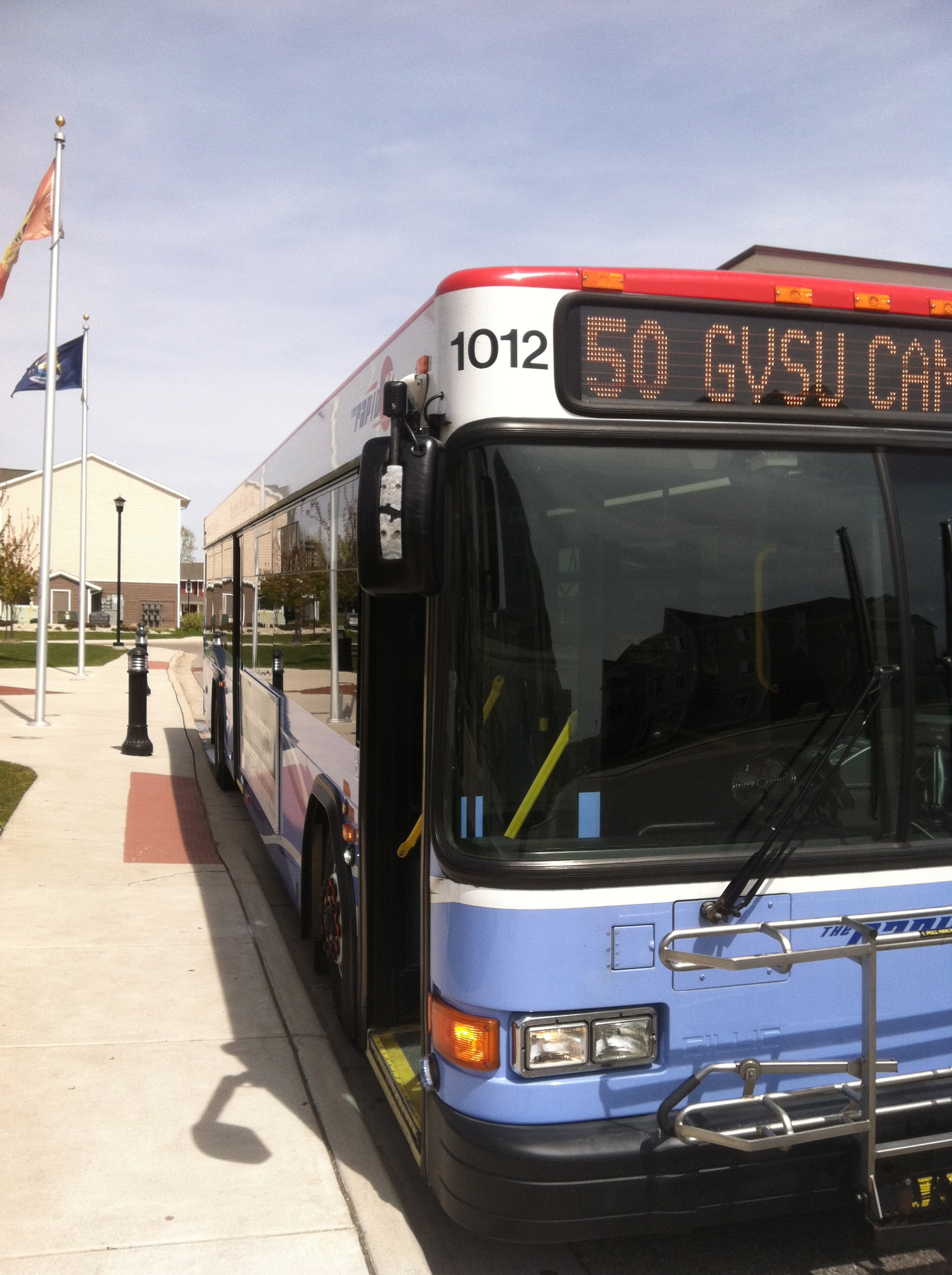
When all of this went on, Walter was driving Route 60, his Monday through Wednesday route, which ran from River City out to the campus of Lazy River Valley State College and back.  The college paid the transit company for the run and the students covered the cost with their tuition so there was no bus ticket to punch; everyone who wanted on got on.   Walter’s run number 360 would leave the garage at 7:25 a.m., giving him five minutes to get to his first stop.  They started paying him fifteen minutes before that so that he had time to inspect his ride and get situated before driving.  Management liked the drivers to sign-in another few minutes before that and asked that they be in the Drivers’ Lounge, outside of Dispatch, by that time. Five seconds late and they’d write you up; get written up a three times and you were gone.  So, he usually drifted in just before 7 a.m.  The host of Song Sparrows was always there, in the steel rafters, on time. It was about a fifteen-minute drive from where he slept to the parking garage and a couple of minutes from the garage to the lounge so he left home about 6:25 a.m.  At seventeen bucks an hour, he was making about a third of what he was before he heard the call.  Once there, he’d check the roster and, when it was time, head out into the garage and locate his ride and do his Pretrip inspection.

One ordinary day, he had bus no. 1053, lane 16 – they were listed by bus number and the lane they were parked in, on the roster, but sometimes they got moved or taken by an earlier driver by mistake.    Some buses he liked better than others.  No. 1053 was okay but nothing special, a newer one with no personality but he still treated it with respect.  They’re a lot bigger than an elephant but he pretended that’s what they were just to keep it interesting; it was easier with some than others.  He had told a few other drivers about his mind-game and how he named the elephants so a few of them had started playing the game, too.  Occasionally another driver, usually a female, would come to him with a name and the reason behind it which was usually something taken from the character of the bus or sometimes taken from some incident the bus was involved in. Some buses were smooth, some were quiet, and some would brake well while others were just the opposite.

It’ll probably take me longer to tell you this than it actually took Walter to do but, as he walked up to the front of the bus, he checked it to make sure it was level and there was nothing obviously wrong with the suspension as well as looking for spots or, as he called them, elephant droppings on the floor that might indicate a fluid leak.  The front door would be open and it was always dark as he stepped in, slung his bag behind the driver’s seat and planted his butt.  He made sure the air brake was pulled out and that the doors were released before turning the engine start knob two clicks.  The buses wouldn’t roll by accident unless you really screwed up but he’d seen the videos in safety class where an operator did just that.  The dash lights would come on and he would see that the transmission was in neutral before pressing the start button and firing up the engine.  He typed his driver and run codes into the Avail, flipped the overhead light toggle, and stepped out of the bus to do his walk-around.

He checked the headlights, signal lights, and running lights to make sure they were all working.  He checked the windshield for cracks and chips, pulled the wiper blades away from the glass and ran his fingers along them to make sure they were smooth and attached, looked at the front outside mirrors, making sure they were secure, clean and not cracked, pulled the bike rack and checked both arms before hooking it back up, walked around the driver’s side and opened the air valve door and toggled each of the levers to make sure there was no water in the lines.  He checked the tread on the front tire, its inflation, the rim for cracks or welds, the hub for leaks, the lugs and nuts for wear or looseness, and the well for any hanging cables or lines.  He moved along the length of the body checking for damage or loose panels, patting her side while he walked, whispering, “Good girl.”

He checked the back driver’s-side tires, walked around the rear of the bus and checked the brake lights and back-up lights as well as the Luminator Sign, which, by that time, was showing, “LRVSC Connector/Kickoff”.  Just like they taught him, he did all of this again on the passenger side but added a check of the back passenger door to make sure he could open it from the outside, seeing that it wasn’t stuck from the washing. Next, he opened the fuel door to see that the cap was in place, shut the door and then looked under the bus for anything that might be hanging.  Climbing back in, he did a walk-thru, pulling the signal cord at three specific locations to make sure the stop signal worked, checked the floor for garbage; he pulled up the front seats, which would make space for the wheel-chair riders and checked the attachment cords and signal buttons and then put the seats back down.  He opened the back door from the inside and checked the windows to make sure they were shut but would open in an emergency.  He knew that the front windshield could be kicked out in an emergency.

Back in the driver’s seat, he checked the wipers at three speeds, the wiper fluid, the defrost/heater fan, the driver’s booster fan, the power ceiling vents, reset the odometer to zero, checked the oil and heat gauges. There were two dash mounted fans that he positioned and checked on low and high speed knowing that on that not-so-rare occasion in River City when it rained, the bus windows would fog right up and these fans and a cracked-open window were the quickest way to clear his vision.  In a bus, you drive with your mirrors and if you can’t see them you’re quickly in trouble.  He made sure the right turn horn was on, that the engine was switched to fast idle, and that his roadside lights were selected.  He checked the right side mirrors to make sure it was safe and then powered up the handicap ramp and deployed it and then brought it back in.  He adjusted his seat and floor pedals and then adjusted the outside and inside mirrors to make sure he could see what he wanted to.  He wanted to see high and low, near and far outside, and the back door and the seat behind him in his blind spot on the inside. He checked the inside and outside speakers to make sure they were working. He checked the camera light to confirm that the seven lenses were functioning. He slipped on his driving gloves, made sure the air-brake was engaged and then shifted the transmission into “Drive” and rocked the bus back and forth a few times, checking the brakes; they held. He went through the cycle of buttons on the Avail system, confirming the checks he’d made, and then punched the transfer button on the fare box and it kicked out a ticket with his run and the current time: it had been nine minutes since he started.

He’d been recording everything he’d done on a large yellow Physical Check Card as he went along – anything too major and he would have called Dispatch and either gotten it fixed or been issued another bus. After his run, he would turn in the card along with his time card.

Each day, at about this time Julie walked by; she had the same route but a different run that left fifteen minutes after him.  They had only talked a few times, at that point, and he made an effort not to talk to her anymore.   They waved at each other in the garage, in the lounge, and every time they’d pass on their routes but like I said, they didn’t talk. There was an instant and obvious attraction between them when they first met but I guess he knew too much to do anything about it and she knew he wasn’t a plaything.  Sometimes, though, he would think, “She’s so fine,” and then, “Fuck it.”

He honked the horn and moved forward in his lane wondering if everyone reached a point where they give up; not a point where they surrendered to some higher power or something noble and wise and they were left better off even though nothing externally changed, but a point where they realized that all their hopes, ambitions, and dreams weren’t going to come true.  Maybe it was middle-age crisis.  Maybe it was existential angst.  For Walter, the problem was that crappy feeling had been with him most all of his life, he told me, except for those times, looking back, when he was mentally ill or most asleep.  What a waste.  He had more talent than ambition. They say people kill themselves when they’ve lost all hope.  I guess he wasn’t there yet although, from what I know, he certainly had the thoughts.  Three things kept him going: The hope that someday he’d be happy and things would all make sense in more than an intellectual way; knowing that he wouldn’t do that to his boys, and the realization that through some accident or the process of natural decay this life would be over soon anyway.

At the appointed time, he pulled out of the garage while honking his horn in a warning, and headed over to his starting point where he kneeled the bus, took on his first load and waited for the proper time to move on. I joined that crowd one time.

At his 7:30 a.m. time point, a signal sounded and he used his right hand to raise up the elephant and it beeped while the right front corner lifted.  He always imagined his beast doing a respectful curtsy to the riders.  He looked in the right outside lower mirror to make sure no-one was trying to get on at the last minute, used his left hand to turn the lever and shut the bus doors, pushed the drive button on the automatic transmission, punched the air-brake release with his left palm and it made its trumpeting sound, took his left toe off of the four-way flashers and shifted it to the left-turn signal, looked in both the left outside mirrors to make sure he was clear, looked in the inside mirrors to make sure everyone was seated so he wouldn’t drop someone to the floor as he moved, took his right foot off of the brake and pushed down on the accelerator pedal and pulled 40 feet and 36,000 pounds of bus with 6,000 pounds of passengers out from New Campus.  He maneuvered around the two school buses that were, as usual, parked halfway out in the street as it curved around between the campus, the museum, and the parking ramp where the early morning worker bees were rushing in from the opposite direction to store their cars for the day.

It was left on Opal Street, under the S-136 overpass where the lanes merge in a way that almost always caused confusion for the drivers, up to the train tracks by the health club where he put on his flashers then stopped just over the manhole cover, opened his doors, looked both ways for trains, closed his doors and moved forward, keeping the flashers on until the rear-end cleared the tracks.  He would barely notice the conversations taking place behind him.  Even though he’d given them adequate warning with the four-way flashing lights, the early morning commuters would often narrowly miss rear-ending the bus as he checked for trains. It would piss most of them off also, because there was a traffic light there and it was pretty easy to get stuck for an extra minute or two.  Opal transitioned into River Dr. and there was a stop at the next corner where Leeward Street intersected.  He’d hit the right turn signal that also beeped, switch to the flashers and then pull six to eight inches from the curb, making certain that side mirror didn’t hit a road sign or a passenger, then kneel the bus and open the door as quickly as possible.

Walter made a point to greet everybody, while looking them in their eyes, with a “Good morning!” or “Howdy!” and a smile.

“I’m looking for someone who’s awake,” he said, when I asked him why he looked in his or her eyes.

He said that some of the kids looked like they were ready to cry, and some were cranky with the hour but each of them was a jewel in Indra’s Net whether they knew it or not.

It was a mile-and-a-quarter, five traffic lights, one stop sign, and that one bus stop from New Campus through Leeward to the next time point at River Dr. and Bellfield Road and they gave him four minutes; he and the bus were almost always late but they would, most often, make it up later on.

At Bellfield there was usually a car parked as close as could be to the bus stop without infringing on the no parking zone so he would flash, kneel and stop straight out in his lane making sure to protect his rear and the boarding passengers by keeping the bus close enough to the parked cars to prevent a car from pulling through.

“No dipping and diving,” he would remind himself.

More pissed off commuters stuck behind a bus.  The speed limit was 25 mph and there was almost always a cop around there so he kept it at the limit.  Up the hill, merge with traffic from W. Motion Ave. and go under the S-96 overpass to the next stop and time point at Vellco Street, about two minutes away but they gave him four.  There was a brick pattern on the Finest Realty building, behind the stop, that looked like a person and it sometimes tricked him into slowing for the stop when it was not needed.  If there was a passenger waiting, it was usually that thin professor with the beard or the young guy with the skateboard and book bag.  That stop was just past the light and it was a pull to the right shoulder in pretty busy traffic, same routine, then back out again: two minutes to the light and stop at Dalecollin Blvd. in front of the Family Fare unless there was an infrequent someone standing at the stop at Oakleaf Street.

Still heading west, it was a lesson in being present, what with drivers on cell phones talking, or texting though it was illegal, eating some kind of fast food meal, getting spooked and giving him the finger when the bus came near them while they were distracted.  There was usually someone at Oakcrest Apartments where there was a good pull-off but it’s over a hump in the road at a strong speed and the lollipop’s positioned behind a tree so he had to watch closely from a distance.  From Dalecollin it was a five-minute time allowance to Spinney St. and the right hand turn to the left hand turn and the stop behind the Area Fire Station.  There would usually be a bus headed the other direction coming through right around the same time, assuming they were both on time, and the drivers would slow for each other then give a man nod or a wave.  If things were good, he had a few minutes to wait before he needed to pull out from there.  Some drivers read a book for three minutes at a time.

He just sat and thought, “All these kids learning how not to be.”

He would pull out, go back on to River Dr. with a right turn over the sidewalk making sure to miss the pylon, up to the next light at Pilsner then on to the stop at Crest Bank across from the shopping center and at a light.  The day I rode, there were a couple of cars in front of him so he couldn’t quite make the stop.  He always left enough room between the bus and the nearest car so that he could drive around the car if it broke down or there was some emergency.  He waved at the students at the stop, signaling them to stay where they were; he’d be right there.  From there, the speed limit increased to 55 mph.  He usually had a couple of students standing just behind the yellow line, staring straight ahead through the windshield, acting like they’re surfing, watching what he did.  That day, there was a beep and a flash and a signal came over the Avail telling him that he had a message. There was one light at 18th Avenue that he had to watch closely. I watched him as he watched the walk light on the right until it got blocked by a road sign then looked to the one on the left when it came into view; when either one turned red he had seventeen seconds to make it through the street light before it would tell him to stop.  Sometimes it was a close call at 55 mph.  He said that when the road was slick in winter, sometimes it was safer to hit the flashers and pound the horn and race on through rather than trying to stop and risk dumping the standing passengers and still sliding into a car.

From that light, it was about four miles to the next light where he’d make a turn into the campus.  The course was a gentle downhill for a mile-and-a-half, then steeply up, and then dropped 140 ft. in the next mile-and-a-half where it crossed the Lazy River, then back up to the campus turnoff.  He liked to stay light on the brakes and maintain as much speed as he could, without getting too crazy, through that stretch.  On each run, it was a new decision whether to get in the left lane before or after the big bridge.  He had never felt it to be too slick or frozen but, if there was going to be an incident, he would rather it happened before or after the bridge where there was more room to maneuver and more room for emergency vehicles, so it came down to the amount of traffic around him.  If he pulled over too soon, he could end up becoming a block to the faster cars; too late and he could get crowded out or be forced to move the cars back or over with a lane change. Getting stopped at the light allowed him to check the message: “Missing person. White female 6 feet 2 inches wearing a gray sweatshirt and gray sweatpants and a pink and black jacket.  If she’s on your bus, call in.” He smiled to himself, slightly nodding his head left and right.

“She’s not on my bus,” he thought and erased the message.

He had four minutes to his next time-point but preferred three so that he wouldn’t block traffic on the two-lane campus roads where it was illegal for cars to pass a bus.  He had to do a lane change before the next light and he drove slowly to eat some time, hoping that the light would catch him and/or someone would want off or that someone would be waiting to get on at the stop just past the light.  It was on to Dreamstate Hall, where half of the riders got off.  Many of them thanked him and wished him a good day, perhaps having had time to realize he’d said hello when they boarded.  A few more got on, including one pretty lady who acted more than her age.

“As if she already has it figured out but doesn’t hold it against anyone,” Walter told me, later.

She lit up, as he said she usually did, and said, “Hi, How are you!”

When she came on board the atmosphere changed. She was wearing something classy, made of some fine looking material in a pleasing color.  He said she always dressed that way.  That day, her brunette hair was in curls and she had on a rose colored top and jeans.  Her gaze kind of lingered on Walter before she moved on.

“I’m old enough to be her dad, if not her granddad,” Walter thought to himself, keeping things in perspective.

Next he drove on to Kickoff, the student center and terminal on campus, where the balance of the passengers would get off, the Luminator changed to “Campus Connector/New”, and he had time to take a leak, if he needed to.  It was a rally point, so to speak, for the buses that ran students back and forth in loops to the apartments and dorms, as well as the other connector buses.  With a few minor changes, the drive back was a mere reversal of the drive out.  It was twelve to thirteen miles each way and Walter would make seven runs before handing the bus over to the next driver.

– Keep Going –