Chapter 14 – Mexico Style

“What if I should die?” he asked. “If you die, just die,” came the response.
Peter Matthiessen

Mara, Jade, and Walter each held the same belief about life, that it was short, but they applied that belief in different ways.

For Mara, that recognition did nothing to offset her pain and on as many days as not, she wished that life was even shorter.

She’d say to Walter, “You’ll be okay. You know what this is all about anyway. You know it’s all just an illusion. You know there is no meaning. I can’t do this anymore.”

Walter would tell her that he knew there was a part of her that wanted to die but killing that part didn’t require killing all of her. He’d tell her that he knew she was in pain.

“Just try to hang in there, for me. I believe in you. I believe that someday you will be walking on a beach or a mountain trail, happy and healthy,” he’d say, “I’ll be there with you and we’ll talk about everything you’ve been through and you’ll be happy that you didn’t end it.”

Walter came home one day to find Mara out back on the patio under the corkscrew willow, sitting and talking with a friend. Behind them, under the tree and up against the bedroom wall, was one of her amazing shade gardens filled with miniature magical plants.

Walter stepped out and said, “Hello.”

They looked guilty, as if caught in the act doing something secret and wrong. He went in and changed to more comfortable clothes, expecting to join them for conversation. When he returned, the friend was gone, having gotten up quickly and left in the brief time he was inside. Walter asked Mara what that was all about.

“Nothing,” she said.

They talked into the evening until her medicine finally kicked in and she slept.

For Jade, the recognition of life’s moderation meant that she didn’t want to waste time with unnecessary feelings, and talk, and drama. She wanted to do things, to keep busy, to accomplish. She appreciated quality and wanted fine things around her. She also wanted to be a good person and to do things the right way and, in that system, she knew that the one thing she didn’t want to do, the one thing she could never do, was intentionally, knowingly hurt Mara. She loved Mara with the love that she couldn’t acknowledge for herself. The problem was, the part of her that “felt” could only held in abeyance for so long.

Walter had once come in and found Jade sitting and crying in Mara’s living room. With Sam, the three siblings had been talking about their father and the life he’d had as an orphan behind the iron curtain. Jade couldn’t contain the anguish she felt for her father. As she sat there sobbing, Mara and Sam stood, distant and numb, just watching her. Walter walked to her and put his arms around her.

Walter realized that he had been assisting in life’s temperance, if not outright then through his behaviors; for years he had been trying to kill himself. He believed that his chronic depression was as much a choice as not and that his mind had chosen to kill his body slowly and quietly – until he met Mara. When Walter decided to really live, he realized, in a different way what “Life is short” meant to him. He decided that as often as he could he would be kind. He also decided that if he felt deeply about someone, he would tell them because he knew that, in an instant, he or that person could be gone without the object of his feelings knowing what he felt. He knew, from experience, that the expression of one person’s feelings could markedly change the experience of another person. So, when Walter met Mara and fell in love with her, and then met Jade and fell in love with her, he could only be honest with both of them about what he felt. His commitment, as a companion, was to Mara, but he was also committed to Jade.

Jade was training for a marathon when her father suffered a stroke and returned to his family. She came home to visit him and asked Walter to run with her while she was home, so that she could continue training for the race. While they were running, he asked her what she thought about on her long runs.
“My breathing, I guess,” was her response.

“On my long runs, I mostly think about you,” was what he said inside his head, but not to her.

They were driving from the lot where he’d parked his car near the running trails, and they talked about her old boyfriends, about running, about her father, brother and sister, about her dogs and job. She was used to his expressions of love for her but still bothered by it. He loved her unconditionally. She didn’t understand that he didn’t need anything from her.

“What if Mara heard you say that?” she asked.

“She knows that I love you,” he said.

“WHAT! WHAT! Are you crazy?” Walter had a friend, long before this story, who told him, “The female river runs deep in you.”

That’s important to understand as true in trying to know Walter. Our hero didn’t see it as it happened, but his problems resulted from two dynamics. The more Mara disappeared into the Void, the less she was available to him, and the more she suffered, the more he feared that she would soon die and he couldn’t bear the thought of that pain, that suffering. His feelings for Mara only deepened as she suffered but, to protect himself, he unconsciously pulled parts of himself back and away from her and, in order to balance his soul and stay sane, he placed those feelings somewhere else. Jade became the object of those projections. It made sense, at the start. Jade was someone he would have been with under different circumstances and someone he truly did love. She was safe because when he met her she was in a successful long-term relationship and that coupling looked to be rock solid and was expected to survive. There would be no risk of Jade ever returning, let alone acting, on those feelings.

It was only a few months before Mara departed for Mexico that Jade discovered that her husband was having an intimate relationship with an old classmate who had Friended him on Facebook. The discovery of that betrayal, as well as finding some pornographic pictures on their desktop computer at home, was enough for Jade to question her reality, realize that she needed some space from the person she thought would always be there for her, and buy him a one way airline ticket, drive him to the airport, and ship him back to his mother. Needless to say, Jade was heartbroken as well as stressed. During this period of uncertainty and isolation, feeling somewhat like a fool and off balance, Jade began reaching out to her sister more than she had in years. The sisters began having frequent phone conversations but Jade, more often than Mara, did the dialing. Mara was in her downward spiral, getting closer and closer to the edge, and usually the best she could do was to just listen as her sister poured her heart out, late at night, over the phone. Whatever belief Mara held about the cruelty of life was only further confirmed by hearing Jade’s pain. Mara increased her sedation, numbing herself with the pills and the booze and would often be unconscious by early evening.

Jade’s troubled heart arched, and as it approached the zenith of its pain, she would reach out to her sister and call her late at night. Mara would often be unconscious to the ringing of her phone. Jade’s soul was torn and she couldn’t sleep. Mara’s soul bled so she quieted herself with sleep. Often, when Mara didn’t answer, Jade would dial Walter’s number and he would answer, no matter the time or the circumstances.

“Hi, it’s Jade. Am I bothering you,” her soft voice would come over the airwaves.

“No, Sweetie, you’re not. Are you okay?” he would ask.

“Is Mara okay? I tried calling her but she didn’t answer.”

“She had a rough day but she’s sleeping. How are you doing?” and they would talk for hours.

Walter saw in her what she couldn’t see in herself. He’d tell her that she was beautiful. He’d tell her that she deserved to be loved. He’d tell her that things would all work out for her, that he had faith in her and in life. All he wanted for her was for her to be okay. He started sending her energy whenever thoughts of her drifted up like whisks of smoke from the ground of his mind. Back then, each time he told her he loved her, she cried. She thanked him for caring.

She wanted to know why, “Why won’t he talk? Why did he do this?” Walter would tell her his thoughts. He’d tell her of his experiences and how he thought they might apply to her situation.

“Why would he look at porn but not at me?” she thought, but she knew the answer, she knew how ugly she was.

He told her, “Who knows, you might go through this hard time and come back together and have the best marriage anyone ever had.”

Before Walter and Mara left for Mexico, Jade phoned Walter and told him that she’d been with her counselor, working on her marriage and on herself, and that they needed to talk.

He said, “Okay, go ahead.”

She told Walter that he didn’t love her, that he couldn’t love her, that he didn’t know her. She told him that this was a classic circumstance where a man was attracted to a vulnerable woman was going through a rough time. She told him that, even if he did love her, his telling her was inappropriate. She didn’t want to talk with him anymore.

Weeks later in Playacar, Walter and Mara had rented a house near one owned by the second richest man in Mexico. Each day, after their running, they would set up their chairs on the beach in front of his house. Walter would peal two oranges and share them with Mara. They would each drink one beer, and then stare at the water for hours. They’d spent the winter and early spring reconstructing their bodies and deconstructing their relationship. It was the winter but nearing springtime and while the change of seasons seemed to make little difference to the natural beauty that surrounded them, or to the agouti, pacas, wild cats, squirrels and birds, it did change Walter and Mara’s awareness that their time in this particular paradise would be drawing to a close. Each morning, as the earth revolved and the yellow dwarf that sits at the center of our solar system, it would seemingly rise up over the Caribbean Sea and draw out those who worshiped its power and its glory. The visitors from Canada, Europe, Russia, and the U.S. would line the beach from the southern boundary of the village to where the sand stopped and the sharp coral coastline began.

Walter remembered how his heart almost broke, that first morning, when Mara had agreed to try to run the mile from the rock to the pier and back. On her small frame, she was carrying an extra thirty pounds of weight put on from the daily bottle of wine and the uncounted bottles of vodka she had consumed over the past year. When they’d left the gray north, her blood sugar and pressure had been dangerously high and her cholesterol was out of control. As they moved, Walter watched for any sign that she might be coming into acute distress. She ran, never once looking at him as he jogged along beside her, never stopping, her little arms pumping with the effort, a frightened look on her face, and she made it. After that, she had taken to the running with a passion and before they left the country, she was running longer and farther and more frequently than he. She dropped the weight and began to take a new pride in her body. This extended trip had been Walter’s plan to try to save her and her apparent love of running gave him hope. The running became their shared habit.

Rolling from the small wooden framed bed that they shared, at 5:30 or sometimes 4:30, and running the beach before the rising of the sun and the people, became their habit. Walter would awaken before the alarm, rise and piss, then move to the kitchen and turn on the coffee pot before laying on his sarong on the hall floor and putting his legs up the wall. Mara, hearing his movement, would rise and pee and then step over him on her way to the coffee and then outside for a smoke while the Tortie cat, from next door, stopped by for breakfast. Mara would take off for the beach, through the darkness, while Walter spent fifteen minutes in meditation before following. The path they took would start from the green moss covered rock that lay mostly buried in the sand in front of the house they’d rented, to the pier that split the beach in two at the village, and then back past that starting point and on to the coral walls two miles distant at the southern end of the khaki colored sand and then back again. She ran barefoot on the packed sand near the surf and suffered, but didn’t mind, glass and shell cuts to her feet and toes. Walter ran in shoes, farther up the slope in deep, soft sand that tested his endurance.

They’d pass, on the beach, but not speak.
: 00, start at moss covered rock
: 09, touched pier
: 39, passed Plastic Man
: 42, passed her, she’s beautiful
: 46, at far wall, the sun’s coming up
1: 15, back at the moss covered rock
1: 35, another lap to the pier, other runners out
1: 55, another lap to the pier, done with Fase Uno

As he ran, he’d see plastic glasses, beer bottles, shoes, sunglasses, syringes, condom wrappers, air filters, empty tubes, ropes, broken plastic buckets, bottle caps, sticks, logs, coconuts, straws, shells, rocks, dog turds, sand shovels and buckets, cushions, chair parts, sea weed, and nuts. He’d see her bare footprints, the only ones in the sand at that hour. He’d see his shoe prints on the laps back, a reverse horseshoe; maritime markers out in the water, ropes strung from the shore to anchors in the surf, marking the edge of each resort. Finding his running path was like a golfer reading the lie of the greens.

Some mornings she, or they, would run it twice; on the second run weaving in and out between the flesh obstacles standing unaware in their way, the beach no longer virgin and untouched, now trampled and marked by the tourists. At the end of each run he’d kick off his shoes and they’d wade into the powder blue saltwater that had become their shared refuge. It was even more so that at these moments they didn’t have to speak.

Out over the water, they could see the lights and outline of buildings on Cozumel. Sometimes they ran far enough to run all the way to that island.

As Walter ran, he listened to his body, hearing what it needed, each part talking back, his mind telling each part that he appreciated it, loved it, giving each part encouragement and attention. When his body said it needed a day’s rest, he gave it. She never rested.

She still had her daily fix of alcohol; she replaced the vodka with beer and allowed herself one glass of red wine, and she continued to self-medicate with the plethora of pills that he couldn’t keep track of but she seemed to have found a balance that fit her. It was her occasional missteps, an accidental fire in the kitchen, the slurring of her words, and once or twice screaming at him when she became unintentionally drunk, that kept him concerned that her balance might be just a temporary improvement.

They had their U.S. cell phones, their Mexican cell phones, Skype and Vonage but it was still a challenge to keep in touch with Jade during their time in Mexico. At least weekly, they would walk into the village, sit outside the cafe that had better Internet service, and Mara would make contact with Jade. Walther waited quietly in the background during these talks. It was a difficult time for Jade and Mara’s being gone pulled out one important leg of support, perhaps the most important.

“Do you think there’s a chance you two will get back together?” Mara would ask.

Slowly, “I don’t think so,” Jade would reply.

“This is hard but you’ll find someone else.”

“No one will think I’m attractive,” Jade would say.

Mara would think she said that because of her breasts. Jade said that because in her mind she knew that she had never been attractive.

The girls talked about Jade coming down, because she really needed a break, but she wasn’t sure she could get the time off, even though she had four weeks of vacation time coming to her; she finally decided she could. She had trouble getting a passport and then had it expedited. She had 500,000 frequent flier miles but couldn’t get a good flight. She was going to stay at their rental until Mara told her they’d seen a cockroach and she freaked. Mara gave her computer links to multiple nearby resorts but she had trouble choosing one. She never made the trip but was never far from their thoughts. Mara and Walter sat on the beach and talked about her, ate oranges, drank beer, swam and ran. On one of their frequent walks into town, they had visited a store in which cut stones and coral, and other items for jewelry making were sold. Walter stood in one spot, watching Mara roam around the isles, picking up pieces, inspecting them, and then putting them back. The eye, or the mind, sees what the eye wants to see and, for a moment, Walter thought he saw Mara drop a strand of coral into the Mexican Indian bag she had hanging from her shoulder. Mara had sufficient money as well as a bounty of supplies already and he knew her to be a good and honest person. He chastised himself, thinking he was mistaken. A few days later, on a similar trip, he had the same strange perception and, once again, he shook it off as false.

He asked her, “You didn’t put something in your bag without paying, did you?”

“No,” came her reply, with a laugh.

“I’m sorry. I just had a weird feeling,” he apologized.

It was the third event, which he witnessed, that he could no longer ignore. She took a strand of large turquoise pieces from the wall of a store and rushed, practically ran, from the store.

He followed he and challenged her and said, “Take those back!”

She threw the string of polished stones into the gutter between the sidewalk and the building and walked rapidly away.

Walter, at first, wanted not to believe it. A new problem…a new drama…a new reason not to be with her. Their verbal fights began; arguments about the drinking, the stealing, the pills. He told that he’d been through this before and that, though he loved her, he couldn’t go through this again. He talked to her about getting caught, there, in Mexico. How it might mean prison but would certainly mean deportation, the end of their sojourn, and probably a prohibition from her re-entry into Mexico. She cried. She apologized. She knew it was wrong and didn’t understand why she had done it; it was just an impulse. They made up and he believed her and forgave her. In a new store, the next day, standing right in front of him with her back to him, she took down a bracelet and stuffed it into her pocket. She turned and saw Walter, shocked. She put the bracelet back and they walked away, he in front of her, silent and defeated.

The next day, as he sat on the beach staring out over the water, Walter realized, perhaps for the first time, that as much as he loved Mara and wanted a good life for her, he had to love himself first, and have his own good life. His heart broke yet understood what had just happened.

It was then that he resolved to leave her upon their return to Michigan.

That was the day that all the wild cats sat facing north-by-northeast and Mara put the kettle bell in her backpack to go for a walk in the sand.
Chapter 13 – Jewel


She (w)hore her sex on her sleeve.

El Hefe


Love the left. There are no bus stops on the left.  Lazy left. Bus back, bus butt.  Point rider.


              Bus driver boredom, “I’m going to see if I get up to 60 mph before the next light.”

              With two hundred and some drivers mixed from both genders, working all hours of the day and night, it became common for affairs of the heart to spring up, prompting his trainer to inform him that, “There’s a lot of love at The River.”

              She’d point out single women who she thought he should consider, not knowing his circumstances but assuming that he was unattached.                  

              There was one driver, at The River, who used to turn his bright beams on so that they’d reflect into the mirrors of vehicles in front of him, usually compelling them to pull further ahead so that the lights didn’t blind them.  He referred to this zone, which was created, as his Safety Bubble.             

              Back on the route 60, it was mostly kids and young adults getting on the bus.  The main campus was thirteen miles, or so, from the downtown campus and there were a lot more reasonably priced rentals in town than out there in the country where the primary school was, plus a lot of the kids still lived at home with their parents.  Some of the older kids were married and lived with their spouse and children in town, also.  Now and then a grad student or a professor would ride, and then there were people who knew the system and had nothing to do with the university who would catch a free ride just to go shopping or whatever; it saved them a $1.50 each way – they looked kind of guilty when they climbed aboard, especially if you were a new driver and they thought you might ask them for a school ID.  He never did ask them, figuring it didn’t cost the system anything, really.  After a few weeks or months of driving, drivers would make some “friends” or, at least, get to see some regulars. On Walter’s run, there was a lady professor who wasn’t that old, she appeared to be younger than he was, who had a stroke and needed special attention getting on and off.  There was a young woman who, he assumed, was a graduate teaching assistant or something similar.  She would ride almost every day, including weekends, and got on and off always at the same stops.  He imagined she was from Peru or some similar South American country.  She had a good but not spectacular figure, pleasant face and nice bouncy brunette hair.  At first she seemed extra friendly but later became just polite.  There was Mary who rode mostly on Wednesday and was in a wheelchair.  She got on near the YMCA, was very polite but seemed to be going downhill the more time passed; looked like she suffered from MS.  Some of the regulars were regularly indifferent or impersonal.  The one young girl who kind of glowed, who was always lighting up whenever she got on, was there that day and they said hello.

              “She’s so cute, full of life – just nice,” he thought, as always. 

              That day Walter thought, “She either doesn’t know about the illusion yet or she’s seen through it and found the miracle.” 

              She always made him smile when she climbed aboard.  She was dressed a little different that day, not quite hippy-like but definitely in her own style; the air she brought on board with her smelled fresh, her hair was dark and in curls and a little disheveled.  When Walter’s shift ended, he pulled in to the New Campus, as opposed to the Garage where he started his morning, and exchanged his bus for one of the shuttle vans that the relieving driver drove over to start her shift. 

              “How’s the bus?” she asked.

              “The brakes are a little loud and one of the advertising panels looks like it’s coming loose,” he had said.

              He’d let her know if anything was left on the bus by a passenger and if there had been any problems, in case some angry passenger or free-rider came back to haunt the new driver.  Sometimes they’d talk about union or contract news. The company gave the drivers fifteen minutes, or so, to drive the shuttle van back to the garage and drop off their time card, so there wasn’t a lot of time to waste.

              When Walter got the van back to the garage that day, he ran into some other drivers who had been in his training class whom he hadn’t seen in quite a while so he spent a little time talking with them, something he usually didn’t do.  By the time the conversations were done, Julie was coming in at the end of her run.  She dropped her time slip off at Dispatch and then walked directly over to Walter.

              “Hi,” she said.

              “Hello,” replied Walter.

              “Are you done for the day?” asked Julie.

              “Yep,” came his reply.

              “Want to get a beer?” she asked, “There’s a place I go to, over on Michigan.  That’s near you, isn’t it?

              Walter had to think about this for a minute, as you already know, there was a strong attraction between them.  She was a pretty woman, dark haired, probably about five foot five or six, nice figure through the clothes.  What he liked the most was her face.  He didn’t have the energy for a new relationship, especially not “one on the side”, and though he and Mara were no longer lovers, he did still love her and had no plans to leave her; and then there was Jade.

              “Okay,” he said, “What’s the name of the place?  I’ll just meet you there, if that’ll work for you.”

              “Sure. Great! It’s the Logan’s Ally,” she answered, “Do you know it?”

              “Yah.  I’ve never been inside but I drive by every day. I’ll head over as soon as I change, okay?” from Walter. 

              There was an exercise room with gender specific locker rooms and showers just down the hall from Dispatch.  Walter kept a change of clothes and a few other things in his locker.

              “Yes.  See you in a few,” she said, not smiling but there was a pleased look on her face. 

              Michigan Street was a good representation of River City, in general.  Coming from the direction of the bus garage, heading west to east, when Walter got near his destination he drove past the Selam Store that sold African food, then the American Legion North East Post No. 456, Duke’s bar, Farah’s Bar, The Lord’s Chapel, Howie’s Bar, Bob’s Sports Bar, Angellous where they sold Christian symbols, finally arriving at Logan’s Ally where the sign out front said, 7-11a.m. Happy Hour – that was their morning sign still standing on the sidewalk. 

              “We’re a little early or late,” he thought.

              He got there just a little after Julie and pulled up to the curb a few yards from the front door of the tavern and parked just behind a black Saturn Sky turbo with a custom license plate that read, “Jewels.”   In her mirror, she saw him pull up so she got out of her car and walked back to meet him as he stepped out of his.

              “Thanks for doing this,” she said, and grabbed his hand and pulled him through the front door of the establishment. 

              Inside it was dimly lit but no there was no smoke, like in the old days when he used to drink; the laws had changed things.  It was a pretty standard bar but had its own character; it had a painting of Abe Lincoln with the bar’s name stenciled on his stovepipe hat.   The bar ran along almost the entire length of the western wall, mirrors and glass shelves with bottles behind it.  To the left of the door, as you came in, there were two shuffleboard tables.   He noticed that there were no windows big enough for a person to go through, only a small glassed slit in the door and a window placed about seven feet up the wall measuring a foot on each side, that was in line with the street light out front and it let a little of that glow in.  Along the eastern wall there was a row of fixed tables divided from each other with wooden panels, making them fairly private on three sides.  Between the bar and the fixed tables there was a row of loose tables that could be pushed around to accommodate different sized parties.  The red neon sign over the hallway in the back left corner said, “Restrooms” and there was a swinging door, to the right, that looked to be where the kitchen entrance was.  The place wasn’t too wide but it was long and Walter guessed that there was room for around one hundred citizens and he figured it was about half full right as he got there.   He figured there had to be a back door to the outside somewhere in the kitchen area and, probably, an emergency alarmed exit somewhere past the toilets. 

              Julie, slightly in front of him, took a quick look around and then headed to the next to the last fixed table, the only one still empty, and grabbed a seat.  Walter sat down across from her where he could see anyone who came or went through the front door.  She looked nice; she had washed up a little bit and he could smell the soap, and she had changed into casual clothes, a fuscia colored t-shirt with a V-neck and jeans and sandals.  She was a woman who knew that she was beautiful but didn’t seem to care. Walter still had on his black Diesel boots and dark blue uniform pants but had taken off his white T-shirt and the burgundy uniform shirt he was driving in and now had on a turquoise short-sleeved pullover. 

              They each ordered a beer, Sixpoint Craft Ales, the Bengali Tiger, which had citrus and grapefruit, for her and the Resin, which was a balanced summer brew, for him, and began talking.  Walter used to have an almost insatiable curiosity about people, especially beautiful women, which kept him asking questions, trying to find out about their early life and experiences, wanting to understand what made them tick.  Now, he hardly talked and couldn’t really care less about the past or what made most anyone tick, he just appreciated the moment; it made him quiet.  This silence, on his part, came across as confidence and made him more attractive to most women when, in fact, it was just symptom of his ambivalence.  Confidence, or the lack of it, never entered the equation for Walter. 

              “You’re gorgeous,” thought Walter, and then he asked, “How was your route today?”

              “The usual,” she said, “It’s just a job that pays better than most. Let’s not talk about work.”

              “Is Jewels your real name?” he asked.

              “Sometimes,” she answered, “My family calls me that, and a few good friends, too; for different reasons, I think.  If you know me long enough, you might call me that.  Call me whatever you want.”

              “Heaven on Earth,” he thought but kept it to himself. 

              Their beers arrived and they toasted each other and took a drink.  The liquid was cold and went down smoothly.  He watched her lips on the bottle, her neck as she took the fluid in, a closer look at the fingers on her right hand holding the bottle, her eyelids as she half closed them, tilting her head back slightly.  There was hardness about her. 

              “She wasn’t always this tough;” he thought to himself, “too pretty for that, almost flawless. Life got to her.  She seems to be handling it well.”

              Just as he was finishing his thought, a flash of light went through the bar.  He was aware of it and thought, “Must have been something outside on the street.”

              “Do you run?  You know, jog?” he asked her getting that out of the way.

              “No way,” she said.

              She asked him a few questions.  He deflected, but was charming in doing so. 

              He countered and it opened the floodgates.  She grew up in Detroit and married her high school sweetheart.  He held a blue-collar job but made good money and she didn’t have to work outside of the home.  He also drank and ran around.  She had two kids with him; they were now in their early twenties and lived in Detroit, about three hours away.  She’d see them, usually, about once a month and talk with them several times a week.  She left her husband more because of the physical beatings than the emotional ones and she was still a little bitter about her collapsed dreams but knew it.  Her father left her mother when Julie was in her teens.  Her mother remarried and Julie became very close to her stepdad until recently.  She worshiped her mother and had nothing to do with her biological father because of his leaving.  Her mother died less than two years ago and she got teary when she talked about her.  He stepfather had already found a new girlfriend and Julie was upset about that; it was too soon.  She was a Christian and wanted to be a writer of children’s books and write about Jesus; she threw in a little religious talk as she went along but not too much.  She knew that her mom was watching down over her.  She took her mother to Mexico in the year before she died and they met an older man, younger than her mother but not by much, while they were there and Julie married him within six months of their return to the U.S.  He lived in Illinois and she moved there to be with him.  She welcomed the sex, found older men attractive, but found out that he was a liar and dishonest so she left him before a year was up. His fishing boat was still parked outside her home and he wouldn’t come pick it up even though she’d called him and written to him about it.  She wanted to sell it but the title was still in his name so she didn’t know what to do.    

              Walter was still thinking that she was beautiful but started smiling to himself, as she talked, and thought, “I love life.  The Universe makes things so interesting!”

              She then explained to Walter, somewhat hesitantly, how her neighbor is a sixty-five year old black man who was caring for his daughter’s two-year-old child while his daughter was in jail.  Julie had fallen in love with the child and, then, with the grandfather and had confessed to him and they had become lovers but she just found out he was cheating on her and she didn’t know what to do.

              Walter said, “Sixty-five?” 

              And “cheating on her?” was his thought.

              “I like older men.  They’re wise and nice,” was her response. 

              Julie went on to tell him how between marriages she met this guy, another black man, in this very bar and they became lovers.  He moved in with her and things were fine until, one night, he kind of had a psychotic break and started trashing her place, breaking the furniture; he threw her on the bed and raped her, breaking her ribs in the process.  From their conversations, she knew that he was wanted in Minnesota so she turned him in and got him arrested and he was doing time there.   He kept calling her, from prison, even though she got a restraining order against him.  He was to get out in six days and she was worried that he’d come back for her.

              Walter started to understand their meeting. 

              “How old is he?”

              “He’s younger, about your age,” she said.

              “Are you still afraid of him?” asked Walter.

              “Yes,” she kind of whispered.

              “Do you own a gun?” from Walter.

              “Not anymore,” was her response, “I used to keep one around the house but he found it and started shooting things, just to see if he could hit them, so I got rid of it.”

              “What kind of things would he shoot?” asked Walter.

              “Birds, bottles, a cat, anything that got left around in the yard.”

              They were hungry so they waved down the barmaid and ordered from the menu, which was tucked behind the napkin holder on their table.  They agreed to split the Garden Quesadilla; it sounded good:  Grilled Red Onions, Succulent Sundried Tomatoes, Fresh Spinach and Portabella Mushrooms, all tucked into a Flour Tortilla with a Special Herbed Goat Cheese Spread and side of House Salsa.  They could add meat but she was happy without it and Walter preferred not to eat anything that once had a face; he also preferred corn tortillas but they were hard to come by in restaurants.  They each ordered another beer, changing to the Righteous Ale, dry-hopped with herbal and citrus hops, for Julie and the Sweet Action, which was touted as being hard to define, for Walter.  He was thinking how she could be his sweet action but he was getting the sense that she wanted another kind of action from him.

              When the food came, things went silent.  As they’d done with their first beers, they each took a taste of the other’s then agreed that the Tiger was the one they liked best.  They talked about leaving so she got up to pee and a wave of fresh air followed her.  Walter took a look around the place and thought he saw a familiar face on a person just before he walked out of the front door but couldn’t be sure.  Julie came back and, just after she did, a girl in her early twenties walked up to her and asked her if she’d play a game of shuffleboard with her. 

              Julie smiled and turned to Walter and asked, “Do you mind?”

              “Go right ahead,” he answered with his own smile.

              While she was playing, Walter got up and went to the bar to pay the tab and talk with the bartender and another patron until she finished. 

              About a half-hour later Julie walked up to him, took his hand, and told him, “This happens all the time.”

              Out front, they kissed. 

              She said, “This was nice,” and then, “What do you think I should do about my problem?”

              Walter thought, “Which one?” but said, “Let me think about it.”

              She said, so quiet that he almost couldn’t hear it, “I prefer the cock to the puss,” and then walked off to her car.

              Watching her walk away, he smiled and thought how perfect life was.

              “This… Here… Now – Breathe In… Breath Out,” Walter practiced.

              He turned around, headed the few feet back to his car, when there was that flash of light, again, the one he’d seen through the window in the bar.  There was nothing he could see to assign the light to.  He was putting the key into the lock on the car door when he heard something behind him.  He turned the key, unlocking the door, and then pulled the key back out and held it between his index and middle finger on his right hand, key fob inside his fist, key shank pointing out like a knife, and then he turned around.

              “Hey Friend,” said the wiry guy who had just stepped off of the curb and into the street, coming from the opposite side. 

              He was smaller than Walter but looked to be all muscle, kind of greasy, with hair too long and uncut, a Detroit Tigers jacket on, left hand out and reaching towards Walter, right hand still in his pocket, unblemished white Nikes on his feet.

              “What’s up Sport?” asked Walter, thinking the name fit.

              “How you doing?” came the response, the man still approaching, walking faster.

              Walter started to move, turning slightly, reaching for the handle on his car.

              “No, hey, no.  How you doing?” said Sport, moving faster, not yet running but within three steps from Walter.

              There was that flash again. The guy was moving his hand in his pocket.    Walter saw the butt of something extending just past Sport’s right hand as it started out of the pocket, but couldn’t tell if it was part of a knife or a gun.  Whatever was in the pocket got stuck on the fabric. The delay was just for a second but that was all Walter needed. As Sport took one more step towards him, Walter also took a quick forward step, closing the gap and bringing him within combat range; he swung his left hand wide and around and, with an open palm, slapped the guy’s right ear, knocking the attached head sideways and bursting the eardrum.  As the shock of that took effect and Sport stopped his attack, Walter pulled back his left hand, as if he were swimming, pushing his body forward in the process, pivoting on his feet and legs, shifting his body weight, and struck the lump, or laryngeal prominence, at the front of Sport’s neck, crushing his vocal folds, injuring his laryngeal nerve, triggering the closure of his trachea, and dumping him backwards onto his butt in the middle of Michigan Street.


                  “The key to survival in combat is violence without hesitation; total, no holding back, and then, if wounded, it’s presence of mind rather than slipping into shock,” Walter remembered the instructor saying, a former pro-football player, standing in the depression in the middle of the Georgia woods, bare chested, K-bar strapped to his waste, holding a chicken above him, drinking the blood as it pumped out, having just bitten its head off.


              Walter turned and saw Jewel’s car just turning the corner two blocks away.  A thin, hard rain was just beginning to fall, carrying on from where it had left off the night before.  He got in his car and drove the mile to Mara’s house in the time it took Sport to suffocate.


Chapter 4 – Mara

DocImage11You cannot save people, you can only love them. Anais Nin

It was through Walter that I met Mara. She was a pretty woman of average height, for an American girl, with a real cute face. Her skin had a healthy glow that survived the assault of the nicotine and booze that she kept throwing at it. She was small boned with petite hands and feet, balanced a small butt with large breasts and she kept her hair in pigtails most of the time. When she was in her sober cycle, which was most often the summertime, she would walk and run and burn off thirty pounds of grain and grape that she stored around her belly and chin through the winter months. According to Walter, she was uninhibited, happy to sunbathe, hot tub, or playfully practice yoga in the nude. She had to be careful not to burn in the sun, but her skin would darken with time and she loved the Caribbean and couldn’t understand why she was born in Michigan. She never found shame in her desires or feelings and felt pleasure and gave the same to a lucky number of men in her time, a character than was quite contrary to her mother’s.

As a youngster, Mara was forbidden, by her mother, to wash her hair except during her bath that was allowed only once per week. She would sneak into the basement, before school and before her mother got up, and wash her bangs and dry them over the heat register, tired of and hurt by the teasing delivered up from the other students at her school; afraid to death that her mother would catch her. In her preteen years, Mara brought home some pollywogs that she’d found in a nearby stream, hoping to name them and keep them as pets. Her mother, upon finding the tadpoles, tossed them into the yard, killing them. Mara’s pet cat got sick; her mother killed it rather than having to incur a veterinarian’s bill for treatment. In her teens, while making some popcorn, Mara burned it and her mother grabbed the pot off of the stove and, screaming at Mara, threw the pot at her, bouncing it off of the wall and making a mess in the kitchen that Mara had to clean up while her mother raged. In addition to her rage, Mara’s mother had assumed the values of an older generation. Beyond that generational conditioning, Mara’s mother had revealed to her, in confidence, that she’d been raped as a young woman; “offered a ride” by some guys after a dance one night. Put those things together and add in that she had been raised Catholic and it’s understandable why she held the value that sex was for procreation and definitely not for pleasure. Walter had asked Mara why her mother revealed the rape to only her, considering how harsh their relationship was.

“She wanted someone to know before she died and she didn’t feel comfortable telling Sam, and Jade had moved away.”

It’s safe to assume that Mara’s father wasn’t getting his sexual needs met and that, coupled with him being a total jerk, led to young Mara becoming the target of his frustration. In the lulls between the regular oral combat that took place between her parents, her father would remark about Mara’s body, show her porn, and offer her money for favors. Once he lifted a brick over his head and threatened to hit her with it when she irritated him. Another time he came at her with some scissors.

When she turned eighteen, after he’d been absent from her life for some years, he contacted her and asked her, “How about a date? You’re no longer jail bait.”

Later in life, when he was in his seventies, she visited him in the hospital, taking off her covering sweater because of the warmth of the room, leaving on her blouse.

“Are you stripping for me?” good old dad asked.

He offered her money if she would let him spank her, saying, “Jade let me spank her and she turned out good.”

She made a point not to see much of him, after that. As a young girl, Mara had fantasized poisoning her parents with the Deadly Nightshade that grew along their property line. She would sit on the floor in a corner of the living room, a book held in front of her face, not reading, just staring, as her parents fought.

Finally, in her late thirties, Mara left the family home, and moved a city block away to her own place. For years she had dreamed of having her own place, a place with boundaries and privacy and room for gatherings of friends away from her mother’s criticism and her brother’s lurking. Once in her home, she fell into a deeper depression and felt anxious and terribly alone. Mara’s parents, like many, expected perfection from their children. Who knows the motivation of most parents, in this regard, but for these it was more out of terror than anything else. To them, life was fragile and resources were scarce and that combination of fears reflected in every act they took. They were also, I suppose, angry at the hand that they felt life had dealt them.

Mara was deep into her depression when Walter met her. Their meeting was before he heard the call, and he sensed in her something different. When they met, Walter was damaged at least as much as most, and more than many, and this damage is, most likely, what let the light, that shined in her, pierce his soul and start his awakening. Walter’s instinct told him that he needed to know her so, at one of their business meetings, he reached across the desk and touched her hand.

A few days later, he was leaving her house after having dropped off some paperwork and he asked her, “You said you were studying some things. Do you mind my asking? What are they?”

She replied, very softly, “It’s nothing. I don’t like to talk about it.”

“No, tell me” he insisted.

“It’s just a story,” she said, and they left it at that.

People thought that Walter was a little crazy, and he was, but Mara said that he only appeared to be crazy because he had, “dark insights.” What she meant was that he had insights into the darkness that people are; he could tell what peoples’ intentions were, almost immediately upon meeting them, through his refined powers of transduction. The fact that he carried such awareness but didn’t try to change anything, with his premonitions, caused him to carry an almost constant scowl and a disbelieving look on his face. What some people saw in him was, in reality, a mirror reflecting the evil that they thought to do and, as the saying goes, “There’s a Nazi inside each of us.”

When Mara met him, she saw without seeing, beyond this quality to the other side of him. What she saw was the part that could perceive the damage being done by energy trapped inside the body of a person at an age before that person could understand and process what had happened. Up until the moment she met Walter, Mara had accepted, in full faith and without question, whatever the universe sent her way and that included accepting Walter. Then it was as if the meeting of him acted as a marker in her life, and within moments after receiving that mark, all things came together and she began to do battle with reality. Walter became a catalyst in her experience, often saying the right thing, or the wrong thing, at just the right time to push her beyond her previous limit. Sometimes Walter would recognize what he had done but, from what I know, most times it passed right by him. When I think about them, it always seems clear that Walter gave Mexico to Mara, and Mara gave Advaita to Walter. You might understand, later. Walter’s third wife, the woman before Mara, had been an unacknowledged alcoholic, as had been the woman that he’d known for the six years prior to that marriage. Part of Walter’s gift was his ability to find the ones who were damaged. He felt, without acknowledging it to himself, that he should help them, save them. Some part of him knew that someone in the equation needed saving. So, he came to Mara sensing the damage in her, himself damaged, and holding a fierce belief in kindness and an unstated need to try to heal the wounds. If only Walter had understood but, as the saying goes, all things unfold as they should, in time. As their relationship grew and Walter began to understand what Mara had led him to, he said that he couldn’t tell if she was clinically depressed or if she was treading water on the Void and she was no help in understanding because, even with her training and experience, she was in it and couldn’t, or wouldn’t, tell where she stood. All she could say was that the things that used to give her joy no longer did, that everything was flat, and that she was bored beyond tears and was beyond wanting to slit her throat. Her only remaining fixation seemed to be the Caribbean; her distractions wine, vodka, and cigarettes.

“Want some wine?” Mara asked.

“Okay.”

They were at the lake cottage; she had forgotten her corkscrew and so she chipped away at the cork with a pair of manicure scissors until she chipped away enough to push the cork through and let the wine out. It was a slow and tedious process, like breaking out of prison. She poured some for both of them. Mara’s sexuality was intermittent as it faded, which didn’t really help Walter very much. He had switched off his desire in the final months of his final marriage and their sex, his and Mara’s, usually consisted of his going down on her.

“What are you doing?” she’d cry, with pleasure, in the first days when he’d suck on her labia.

She enjoyed that until it, too, became painful. That weekend, at the cottage, her sexuality was in an upswing. They were sitting on separate couches, looking out at the water, talking while sipping from their plastic wine glasses. Mara got up and walked around the sofa and up the four steps to the hall and into the bathroom. She was gone a few minutes and then returned bringing a pink aura with her, walking over to Walter.

“Let’s have anal sex,” Mara said, handing him a condom and some lubricant, “I love it in the ass. I used an enema and I’m clean.”

He’d never had anal sex before and the idea excited him. They stripped and dropped to the carpet, kissing and petting. She rolled him on his back while kissing him and reached her hand down to his penis, massaging it. She moved her lips from his and took his cock into her mouth and sucked. He grew hard and she pulled her face away. She opened the wrapper of the condom and slid it over his cock and then lay down on her side, her back to him, grabbing her ass cheek and spreading it away from the other one, opening herself up to him. Walter took the top off of the lube tube, put some on his fingers and rubbed it into her asshole. He grabbed his cock and moved towards her…and grew soft.

“Uhhh, sorry. Just a minute,” he said.

“What’s wrong?”

“Nothing. Just give me a minute.”

She was patient. She just lay there, waiting, wanting it. “Is something wrong? Don’t you want to do this?”

“I’m sorry. Yes, I do,” he said, trying to think of anything more erotic to give him back his erection.

Failing, he said, “Let’s just wait a bit and then try again, okay?”

They got up off of the floor and sat beside each other on one of the couches. They drank some wine and waited while the condom fell off of his limp dick.

She said, “That’s okay. I understand.”

At first Walter felt mad, but not at her, and then he laughed internally. “This is so stupid” he thought. What a great joke. “What could be more erotic?”

She finished her wine and moved from the couch, placing her sarong on the floor then lying down on it to nap. The weight of her milky breasts pulled her lobes outward towards each side of her body, her large pink nipples were soft and relaxed. She had been letting her pubic hair grow and it was a warm, natural strawberry blonde, in contrast to the auburn hair on her head. She had gorgeous legs. Walter liked underarms and looked at hers. He started growing hard, again. She sensed him and opened her eyes but didn’t move her body. He stood up, over her, and grasped his hard cock in his hand and stroked. She just watched him with no expression on her face. He grew harder until he came, spewing over her body, his warm semen falling on her, spotting her flawless skin. The only movement she made was to spread her legs farther apart and push her mons pubis up as she came with him. Mara closed her eyes and fell back asleep while Walter went into the bathroom and ran some hot water over a wash cloth, cleaned the lubricant from himself and then rinsed the cloth, wet it again and, taking a towel, went to Mara and cleaned her while she dozed. Kneeling there, he gently touched her with the warm, wet cloth and noticed that her fingers effused a green color, he assumed from picking basil in her garden. She smelled of nicotine. She was adding fat to her stomach and face. He wondered, again, why she wouldn’t just stop killing herself, why she couldn’t see what she was doing. He thought that she should be able to just flick a switch inside her brain and make a choice to be happy.

“Just kick off the demons that are clinging to you and move forward, be happy,” he willed.

I came to understand that as strongly as she was drawn to her needed substance; he was drawn to her in an attempt to keep her safe. I’m not sure he ever realized that. What he also didn’t realize was that, in being so obsessed with her, he was able to avoid having to stare into the eyes of the beast that stood disguised, right in front of him. It’s the same beast that stands in front of each of us.

Mara’s brother, Sam, who owned the lake cottage, had, for the first time, fallen in love and subsequently abandoned the property, letting woodpeckers drill through the exterior siding and make their home in the stud bays, allowing the weeds to grow tall in the sand leading to the water and being content to let the fallen leafs coat the cement patio and walkway. Walter had pulled the tall plants from the sand, clearing a path from the patio to the lake, winding its way past trees, the storage shed that was beginning to fall apart from having fallen off of Sam’s list, and around the fire pit to the water. They hadn’t put the dock in the water that year and the pontoon boat had remained stored in the garage. Later that day after her nap, she was on the path through the sand, walking towards the water carrying a glass of vodka and orange juice.

Walter stared after her and said, “You’ve given your flatness to me.”

“I’m sorry.”

“That’s okay. It’s probably a good thing.”

That day as she walked away from him and towards the water, he had looked up at the sky and the clouds and, for the first time, he saw what is always there but what most never see and what he hadn’t seen before in fifty years of looking. It took his breath away. It overwhelmed him with its magnitude. It made him weep and drop to the ground as he started to understand. Mara was floating on a rubber raft when this happened, a witness limited to her own thoughts. She stayed on the water for an hour or more before floating her way back to the shore. During that hour, Walter’s mind had stopped and his face was just as blank. Mara had beached her floaty and started her walk up to the cottage, starting to pass Walter as she got to the cement patio, intending to get a fresh drink and smoke a cigarette. She stopped walking when she saw his aura glowing yellow. She stood there, for once no longer lost from the world, worried that he might be ill, until she understood that he was just starting to get well.

“There’s a flow to it, isn’t there?” she said to Walter. He just turned his face towards hers and looked into her eyes. She patted his shoulder and resumed her mission, passing into the cottage.

Chapter 3 – Walter

Those who dream by day are cognizant of many things that escape those who dream only at night. Edgar Allan Poe

He walked quickly from his car through the garage, the breezeway, the hall, the kitchen, and with most haste, through the next hall and into his room carrying his load. As he passed through the beaded curtain hanging in the doorframe, the combination of his fear, distraction, and too many things in his arms caused him to drop his umbrella onto the hall floor just outside his door and resulted in an elevation of his anxiety up one more notch. He lowered the balance of his load onto the desk facing the window, got down on his hands and knees, and crawled to the edge of the room, just inside the door and around the wall so that he couldn’t actually see to the left down the hall, nor could he actually see the fallen umbrella that he was trying to retrieve but most importantly, he couldn’t, yet, be seen by anything or anyone whom might be coming out of one of the other rooms down the hall. A trickle of sweat, a dust of perspiration appeared across his face, neck, and forearms. Stretching, straining, he reached his hand into the hall, felt around the carpet, touched something hard yet soft, hooked it with his fingers, and pulled it, as quietly but as quickly as he could, into his room, his level of anxiety nearing the “freak out” point. With great relief, he realized that he’d retrieved the umbrella. He gave it a quick look-over, unsnapped the strap that held it wrapped shut, made certain nothing was stuck to it or had slithered into it, nothing hidden in the folds, nothing attached, then snapped it back and hung it on a hook in the closet.

“The window…is there something at the window? Is there something looking in?” He heard the hiss before It came.

“It’s the wind,” was his first thought. His second thought was, “That’s not the wind.”

By then it was too late to avoid some damage but there was still enough time to survive. That’s what he thought. He started running, out of the house and down the driveway to the street. The one he was worried about rode by on a bicycle. He reached forward, running, to grab the guy on the bike. The move required him to lean forward and stretch out in length. The guy on the bike leaned back and, with one hand, slit his throat from below his Adam’s apple up to his chin. Walter had woken up from the dream, not totally covered in sweat but close. He had felt relieved, given a bit of a laugh and had shaken his head.

“What the hell?” he thought.

He was up at 1:54 a.m. Sunday, and used the upstairs bathroom to piss, sitting that time, and had looked out the window and up at the roof of the garage. There was something on top, sitting there, bigger than a cat, bigger than a raccoon, staring down at him.

“Another dream?” asked his mind.

He had been too tired to go outside and clarify what he had seen and so he just went back to bed, sleeping and unaware of any more dreams or things watching him, until 6:30 a.m. when his alarm went off. It was a day when Walter had agreed to meet me at the East River City High School track for speed work and we were on for 7:30, which would give us enough time to get our laps in before the football players, cross country runners, or any other students needed to use the track. He ground the Midnight Sun dark roast coffee beans and started them brewing before dropping into Mara’s basement for his usual routine, rising back up fifteen minutes later to pour a mug and grab a small bowl of Stoneyfield Organic Plain Nonfat Yogurt with some blueberries and walnut pieces. We liked to do our speed work early and on nearly empty stomachs and he had found that this combination kept him comfortable. It was raining outside, as it had been for several days, but we kept to our schedule through most kinds of weather. Walter had suffered some spinal damage during the years he spent doing the things that he only barely spoke of. Some things he never spoke of, now I’m sure. Anyway, that nerve damage had caused him to lose the dorsal reflex that impacted his right foot and also paralyzed the big toe on that foot. As a consequence, he was never able to wear barefoot shoes, and when going barefoot he always risked the possibility of stubbing that toe, potentially breaking it but at minimum tearing the skin and toenail badly. What he liked to do, was wear his near-barefoot shoes when doing the fast running, so he usually came to the track wearing his Birks and then switching into his Nikes or New Balance, saving his Saucony shoes for actual racing. He was living about ten minutes from the track so he beat me there and was waiting when I arrived.

“Good morning,” I said.

“Hey,” he responded, with a little head lift.

“Let me get loosened up,” I said. “Are you already set?”

He just nodded in the affirmative. I did some active stretching, swinging on one leg and then the other, doing some standing trunk twists and arm rotations followed by twenty-five jumping jacks and a few deep knee bends.

“All set.”

We jogged together, a relaxed four-forty, splashing water as we went along, just to get our blood flowing and then started the stopwatch. From there on, we ran four cycles of a two-twenty flat out, followed by a two-twenty jog, and then switched it up to six cycles of a four-forty flat out, split with a four-forty at a jogging pace. We were soaked to the bone by then.

“You want to do a timed mile?” he asked me.

“I’m not sure that I feel up to it,” I answered.

“How about a mile at an 8 1/2 minute pace?” he wouldn’t give up.

“Someday, you’ll roll that foot over and break your ankle,” I said, giving in.

When we were done, I was exhausted; I don’t know about him. We gave each other a fist bump and he started doing some static stretching in the rain.

“Hills Monday?” he asked.

“Can’t wait,” I said, walking to my car.

That noon, Walter was sitting in Snout & Belly, the hotdog place in East Town where he’d ordered a Tofutti dog, “No Snouts, No Bellies, No Hooves”, and was just finishing his meal. He tried to not eat anything that had once had a face, especially if it was a face he might have known. He had taken his raincoat and hat off and was wearing a short-sleeved shirt and had his elbows on the table with his hands raised to his mouth, holding his food. If someone were close enough to look, they would have seen several thick, short scars across the and backs of both of his hands and one or two lining the skin near his right elbow. His forearms were turned out so that anyone, who wanted to, could see the Nietzsche tattoos that said, “What doesn’t kill you (moving to the left) makes you stronger.” It wasn’t that he wanted anyone to see what was written in his skin, he just didn’t care. To anyone who might have known of Walter’s past, it would have been apparent that the few days he had spent in Vietnam, Bosnia and the Persian Gulf hadn’t killed him yet, but they could also tell from looking at him that the strength of his youth was pretty much gone, although a hard core remained. It was anyone’s guess as to whether he’d tip to the right forearm or the left. “We will all, eventually, tip to the right,” he had told me one day.

In the diner, the television was on above the service counter, and a local news report came on, mentioning The River and catching Walter’s attention. “A week from Friday will be the inaugural ceremony of the new garage for The River. U.S. Secretary of Transportation James Hartwell will be cutting the ribbon and formally opening the structure. Local officials hope to inspire an additional $25,000,000 in federal grants following a closed-door presentation scheduled to take place after the ceremony. The public is welcome to attend the ribbon cutting and can gain access at the main entrance on Jacobs Street, in downtown River City, at 11 a.m.,” announced the reporter. Walter knew that he’d be out of the garage, driving his regular route at that time on that day.

Walter’s mobile phone vibrated in his pocket and he reached for it.

It was Mara calling. “Where are you?” she asked.

“I’m just finishing lunch. You remember, right?”

“Oh, that’s right. I forgot,” came her voice.

It seemed that she was forgetting more often. He didn’t know if it was the medication and the booze but he knew that the combination messed with the wiring in her head. It could be that she just had other things on her mind; he didn’t really know what went on in there and she didn’t shed much light on it. Sometimes she would seem to not be paying attention at all, not responding to participating in their conversation and then, weeks or months later, she’d quote something he had said or reference the conversation in some other way.

“They are all different,” he thought, thinking of the women. He had sat there, in the restaurant, surrounded by women, looking at every one of them without consciously thinking about it, filtering out the ones he could imagine himself sucking on or them sucking on him. Tummies, some just little pooches sticking out in the front, probably having their period, others wrapping around the sides and back; nice figures, nice shapes with tummies, cute little butts.

When Walter met Mara, his third wife had just left him. They had been married for about nine years. Her previous husband, and the father of her children, was a good looking private detective who both packed a gun and was still in love with her but he was also a man who couldn’t keep his dick in his pants and she’d grown tired of his indiscretions and had left him after the kids graduated from high school. They’d lived about a mile apart and remained occasional lovers until she met Walter. When she and Walter married, her ex called their home crying, professing his love and threatening to kill Walter. Of course he didn’t truly understand who Walter was. When Walter heard the threat, he just smiled.

Sometimes Walter felt that he was a little slow and it was years into it that he realized that she wasn’t happy the day he tried to make love to her and she hopped out of bed and said, “Why would I ever want to make love with someone like you?”

They tried marriage counseling.

Walter said, to the therapist, “I know she loves me.”

The therapist said, “Let’s find out” and, turning to his wife, asked, “Do you love Walter?”

“He’s a good man,” was her response.

“But do you love him?”

“A lot of things would have to change for me to say that.”

“So, you don’t love him?”

“I wouldn’t marry him again.”

She came home one day and gave notice that she had to leave the state, go south, to take care of her parents for a couple of months and suggested that Walter come down for Christmas.

For Christmas, she spent the days with her ex-husband and their kids and said, over the phone, to Walter, “Why don’t you come down for New Years?”

Walter’s response was, “Why don’t we get a divorce?”

To which she replied, “I never thought of that.”

With KK in the passenger seat, he drove the Tahoe into the parking lot, looking for the best place to park to give her a good field of vision, knowing that after he parked and went inside, he’d come out and she’d be gone forever.

They were divorced ten months later, with everything being done over the Internet and through the mail. She came home while Walter was out of town, and took all of the things she wanted from their house. The financial settlement and Walter’s fucked up value system pushed him into bankruptcy but, and I’m just guessing here, it also created the crack in his time based Dreamstate that allowed him to hear the Call.

The more we talked, the more it became clear that Walter knew that he saw everything through smoky glasses, that his whole world, or his perception of the world, was shaded by the pain in his experience and, even with all the things he’d seen and done, his greatest pain seemed to be connected to the women in his life.

His awareness came back to the diner and the television. The reporter was saying, “Record breaking rains with flooding continued across Michigan on Sunday, forcing evacuations and claiming the lives of ten people who drove off washed out roads and were swept away by swollen rivers. In western Michigan, residents around the Lazy River were being warned of possible evacuation. The flooding impacted at least one-third of the community around the Valley. Damage estimates were still being calculated. The cost of repairing public roads and facilities alone is reaching $100 million.”

He gathered up the plastic utensils, paper plate, napkin and foam cup he’d used and carried them over to the trashcan and dropped them in. He was feeling his belly as he went back for his coat and hat, and was aware of his body, his arms and legs beneath his clothes.

“I’m getting hard yet fat at the same time. It must be from running, doing pushups, and practicing yoga, all while eating donuts,” he thought, resolving to cut back on the pastries.

He left the diner, walked steadily through the rain to his car, got in and drove home to Mara’s.

When he got inside, he hit the head and looked in the mirror as he washed his hands, unspoken words floating up from the bed of his mind, “I look better than I am, and I’m not looking too good,” it was becoming his mantra, and then, as if he had no control over his thoughts, “A form, a wrapper, a machine, a tool, a shell, a carrier, a vessel, a cover, a mask, a transporter, a distraction, a deception, a feint, a glove, a decoy, a body, not an illusion because it’s real but misperceived or misunderstood. This is me, breathing. What is this Me? What am I?”

Later that day, Walter had driven Mara to the mall where she wanted to buy some fabric to make a throw for Jade. She had gone into Joann Fabrics and he had decided to sit on a bench inside the mall but not within the store and wait for her to finish her shopping. Walter wanted to tell me what had happened to him that day but he wanted to preface his story with another, so that I might better understand. I think what he really needed was a framework to put things into context so that he could better understand what he had experienced. I imagine it was even more difficult, for him, to try to explain it. I also think that he was beginning to suspect that I thought he was going crazy.

“I knew this guy,” he said, “who was an all-state athlete in high school before he went into the military. In the service, he excelled at everything he did; he took all of the schools that were offered, just to become a better soldier. In addition to the physical training they gave him, he took martial arts lessons off base, studied combat theory, and talked to every combat veteran he could. You could have asked anyone who knew him and they would have told you that he was a world-class soldier, clearly better than the rest.”

He paused for a moment.

We were running on the Kent Trails and a faster group was passing us by.

“He was with a group that took the airfield in Panama City when we went in for Noriega. He was with his squad, so there were eleven other guys with him. They had just taken a position behind a metal airplane hangar, when someone opened up on them with automatic fire. One bullet, just one, ricocheted off of the hangar and killed him. The shooter wasn’t even aiming at him; he was just spraying bullets in his direction. He never even had the chance to fire his own weapon in combat. Out of the 150 or so guys in his company, he was clearly the best and, yet, he was the only one killed that day,” he said.

“Okay,” I said.

“There’s a lot of randomness in life,” he said, making his point.

“I hear you,” I said.

“So, I was sitting in the mall, waiting for Mara,” he continued, “and I saw something.”

I just waited.

“You’ll probably laugh, or you won’t understand,” he talked on, “but I saw the Void and it scared the shit out of me.”

I just listened, not really knowing what the fuck he was talking about. “I can’t explain it but it was the Infinite Nothing, a depth that was frightening. It only lasted for a few seconds. It was like looking at a gathering of sand covering a piece of glass or a mirror, and then the sand pulled back and I saw what was hidden; there was nothing looking back at me.”

“So what’s that got to do with the guy who got killed in Panama?” I asked.

“This stuff just happens. We don’t know when it’s coming or who’s going to receive it,” he said, “no matter how much we prepare or anticipate.”

“I get that,” I agreed, “but I’ll have to think about what you saw.”

We kept running, staying pretty quiet for the next hour.

In time I finally came to understand what Walter was doing, without him having to tell me. In the words of Joseph Campbell, he was trying to disentangle himself as kindly and carefully as possible from the commitments he’d made while asleep; there were others depending upon his role in their dream, maybe I was one of them, and his intention was not to cause chaos or shake the boat but rather to get out as quietly as possible even if it took him a little longer than he’d like

Chapter 2 – Bus Driver

IMG_0481What are you doing with all this material, making a bedspread?

Ralph Kramden

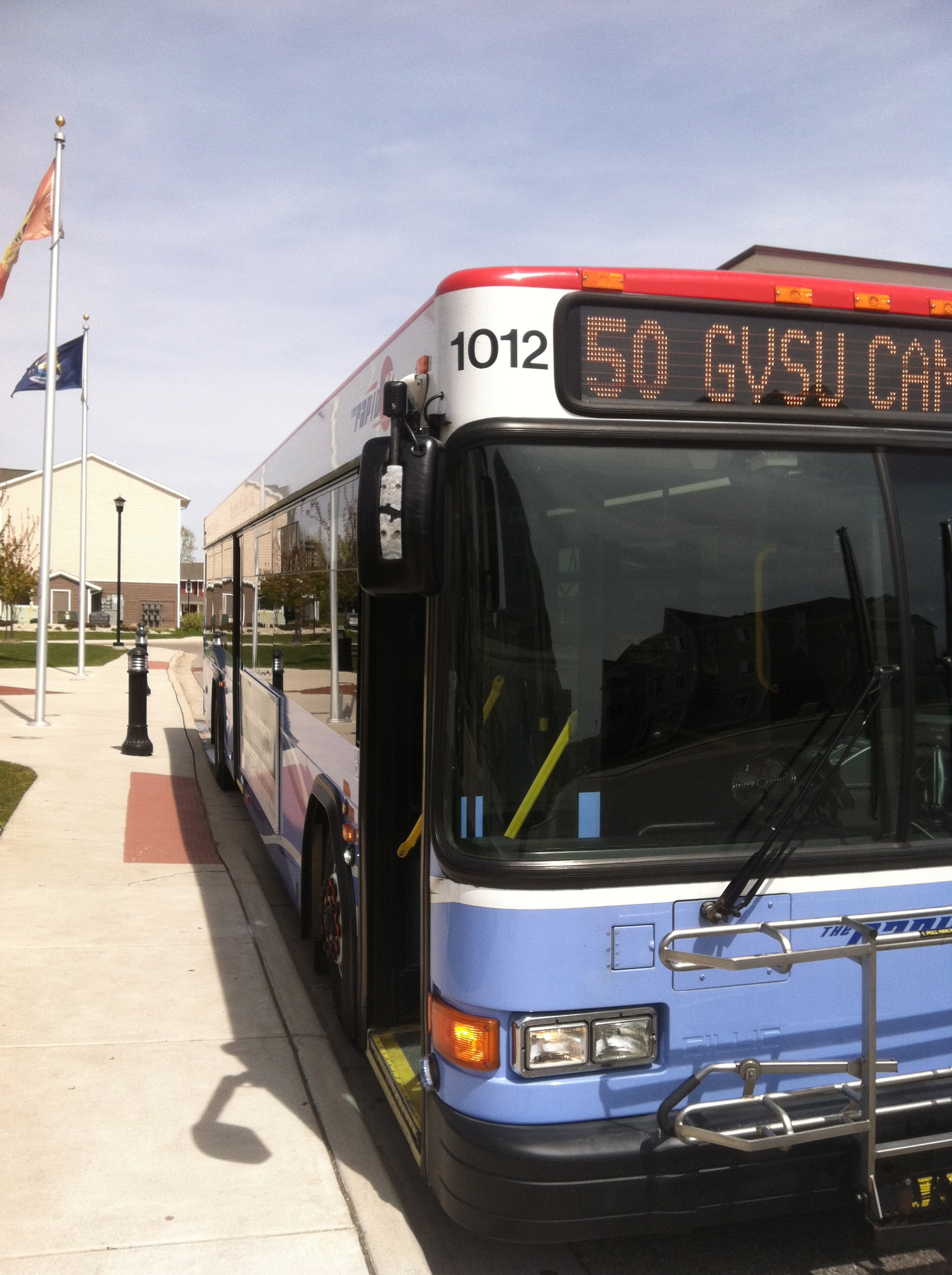
When all of this went on, Walter was driving Route 60, his Monday through Wednesday route, which ran from River City out to the campus of Lazy River Valley State College and back.  The college paid the transit company for the run and the students covered the cost with their tuition so there was no bus ticket to punch; everyone who wanted on got on.   Walter’s run number 360 would leave the garage at 7:25 a.m., giving him five minutes to get to his first stop.  They started paying him fifteen minutes before that so that he had time to inspect his ride and get situated before driving.  Management liked the drivers to sign-in another few minutes before that and asked that they be in the Drivers’ Lounge, outside of Dispatch, by that time. Five seconds late and they’d write you up; get written up a three times and you were gone.  So, he usually drifted in just before 7 a.m.  The host of Song Sparrows was always there, in the steel rafters, on time. It was about a fifteen-minute drive from where he slept to the parking garage and a couple of minutes from the garage to the lounge so he left home about 6:25 a.m.  At seventeen bucks an hour, he was making about a third of what he was before he heard the call.  Once there, he’d check the roster and, when it was time, head out into the garage and locate his ride and do his Pretrip inspection.

One ordinary day, he had bus no. 1053, lane 16 – they were listed by bus number and the lane they were parked in, on the roster, but sometimes they got moved or taken by an earlier driver by mistake.    Some buses he liked better than others.  No. 1053 was okay but nothing special, a newer one with no personality but he still treated it with respect.  They’re a lot bigger than an elephant but he pretended that’s what they were just to keep it interesting; it was easier with some than others.  He had told a few other drivers about his mind-game and how he named the elephants so a few of them had started playing the game, too.  Occasionally another driver, usually a female, would come to him with a name and the reason behind it which was usually something taken from the character of the bus or sometimes taken from some incident the bus was involved in. Some buses were smooth, some were quiet, and some would brake well while others were just the opposite.

It’ll probably take me longer to tell you this than it actually took Walter to do but, as he walked up to the front of the bus, he checked it to make sure it was level and there was nothing obviously wrong with the suspension as well as looking for spots or, as he called them, elephant droppings on the floor that might indicate a fluid leak.  The front door would be open and it was always dark as he stepped in, slung his bag behind the driver’s seat and planted his butt.  He made sure the air brake was pulled out and that the doors were released before turning the engine start knob two clicks.  The buses wouldn’t roll by accident unless you really screwed up but he’d seen the videos in safety class where an operator did just that.  The dash lights would come on and he would see that the transmission was in neutral before pressing the start button and firing up the engine.  He typed his driver and run codes into the Avail, flipped the overhead light toggle, and stepped out of the bus to do his walk-around.

He checked the headlights, signal lights, and running lights to make sure they were all working.  He checked the windshield for cracks and chips, pulled the wiper blades away from the glass and ran his fingers along them to make sure they were smooth and attached, looked at the front outside mirrors, making sure they were secure, clean and not cracked, pulled the bike rack and checked both arms before hooking it back up, walked around the driver’s side and opened the air valve door and toggled each of the levers to make sure there was no water in the lines.  He checked the tread on the front tire, its inflation, the rim for cracks or welds, the hub for leaks, the lugs and nuts for wear or looseness, and the well for any hanging cables or lines.  He moved along the length of the body checking for damage or loose panels, patting her side while he walked, whispering, “Good girl.”

He checked the back driver’s-side tires, walked around the rear of the bus and checked the brake lights and back-up lights as well as the Luminator Sign, which, by that time, was showing, “LRVSC Connector/Kickoff”.  Just like they taught him, he did all of this again on the passenger side but added a check of the back passenger door to make sure he could open it from the outside, seeing that it wasn’t stuck from the washing. Next, he opened the fuel door to see that the cap was in place, shut the door and then looked under the bus for anything that might be hanging.  Climbing back in, he did a walk-thru, pulling the signal cord at three specific locations to make sure the stop signal worked, checked the floor for garbage; he pulled up the front seats, which would make space for the wheel-chair riders and checked the attachment cords and signal buttons and then put the seats back down.  He opened the back door from the inside and checked the windows to make sure they were shut but would open in an emergency.  He knew that the front windshield could be kicked out in an emergency.

Back in the driver’s seat, he checked the wipers at three speeds, the wiper fluid, the defrost/heater fan, the driver’s booster fan, the power ceiling vents, reset the odometer to zero, checked the oil and heat gauges. There were two dash mounted fans that he positioned and checked on low and high speed knowing that on that not-so-rare occasion in River City when it rained, the bus windows would fog right up and these fans and a cracked-open window were the quickest way to clear his vision.  In a bus, you drive with your mirrors and if you can’t see them you’re quickly in trouble.  He made sure the right turn horn was on, that the engine was switched to fast idle, and that his roadside lights were selected.  He checked the right side mirrors to make sure it was safe and then powered up the handicap ramp and deployed it and then brought it back in.  He adjusted his seat and floor pedals and then adjusted the outside and inside mirrors to make sure he could see what he wanted to.  He wanted to see high and low, near and far outside, and the back door and the seat behind him in his blind spot on the inside. He checked the inside and outside speakers to make sure they were working. He checked the camera light to confirm that the seven lenses were functioning. He slipped on his driving gloves, made sure the air-brake was engaged and then shifted the transmission into “Drive” and rocked the bus back and forth a few times, checking the brakes; they held. He went through the cycle of buttons on the Avail system, confirming the checks he’d made, and then punched the transfer button on the fare box and it kicked out a ticket with his run and the current time: it had been nine minutes since he started.

He’d been recording everything he’d done on a large yellow Physical Check Card as he went along – anything too major and he would have called Dispatch and either gotten it fixed or been issued another bus. After his run, he would turn in the card along with his time card.

Each day, at about this time Julie walked by; she had the same route but a different run that left fifteen minutes after him.  They had only talked a few times, at that point, and he made an effort not to talk to her anymore.   They waved at each other in the garage, in the lounge, and every time they’d pass on their routes but like I said, they didn’t talk. There was an instant and obvious attraction between them when they first met but I guess he knew too much to do anything about it and she knew he wasn’t a plaything.  Sometimes, though, he would think, “She’s so fine,” and then, “Fuck it.”

He honked the horn and moved forward in his lane wondering if everyone reached a point where they give up; not a point where they surrendered to some higher power or something noble and wise and they were left better off even though nothing externally changed, but a point where they realized that all their hopes, ambitions, and dreams weren’t going to come true.  Maybe it was middle-age crisis.  Maybe it was existential angst.  For Walter, the problem was that crappy feeling had been with him most all of his life, he told me, except for those times, looking back, when he was mentally ill or most asleep.  What a waste.  He had more talent than ambition. They say people kill themselves when they’ve lost all hope.  I guess he wasn’t there yet although, from what I know, he certainly had the thoughts.  Three things kept him going: The hope that someday he’d be happy and things would all make sense in more than an intellectual way; knowing that he wouldn’t do that to his boys, and the realization that through some accident or the process of natural decay this life would be over soon anyway.

At the appointed time, he pulled out of the garage while honking his horn in a warning, and headed over to his starting point where he kneeled the bus, took on his first load and waited for the proper time to move on. I joined that crowd one time.

At his 7:30 a.m. time point, a signal sounded and he used his right hand to raise up the elephant and it beeped while the right front corner lifted.  He always imagined his beast doing a respectful curtsy to the riders.  He looked in the right outside lower mirror to make sure no-one was trying to get on at the last minute, used his left hand to turn the lever and shut the bus doors, pushed the drive button on the automatic transmission, punched the air-brake release with his left palm and it made its trumpeting sound, took his left toe off of the four-way flashers and shifted it to the left-turn signal, looked in both the left outside mirrors to make sure he was clear, looked in the inside mirrors to make sure everyone was seated so he wouldn’t drop someone to the floor as he moved, took his right foot off of the brake and pushed down on the accelerator pedal and pulled 40 feet and 36,000 pounds of bus with 6,000 pounds of passengers out from New Campus.  He maneuvered around the two school buses that were, as usual, parked halfway out in the street as it curved around between the campus, the museum, and the parking ramp where the early morning worker bees were rushing in from the opposite direction to store their cars for the day.

It was left on Opal Street, under the S-136 overpass where the lanes merge in a way that almost always caused confusion for the drivers, up to the train tracks by the health club where he put on his flashers then stopped just over the manhole cover, opened his doors, looked both ways for trains, closed his doors and moved forward, keeping the flashers on until the rear-end cleared the tracks.  He would barely notice the conversations taking place behind him.  Even though he’d given them adequate warning with the four-way flashing lights, the early morning commuters would often narrowly miss rear-ending the bus as he checked for trains. It would piss most of them off also, because there was a traffic light there and it was pretty easy to get stuck for an extra minute or two.  Opal transitioned into River Dr. and there was a stop at the next corner where Leeward Street intersected.  He’d hit the right turn signal that also beeped, switch to the flashers and then pull six to eight inches from the curb, making certain that side mirror didn’t hit a road sign or a passenger, then kneel the bus and open the door as quickly as possible.

Walter made a point to greet everybody, while looking them in their eyes, with a “Good morning!” or “Howdy!” and a smile.

“I’m looking for someone who’s awake,” he said, when I asked him why he looked in his or her eyes.

He said that some of the kids looked like they were ready to cry, and some were cranky with the hour but each of them was a jewel in Indra’s Net whether they knew it or not.

It was a mile-and-a-quarter, five traffic lights, one stop sign, and that one bus stop from New Campus through Leeward to the next time point at River Dr. and Bellfield Road and they gave him four minutes; he and the bus were almost always late but they would, most often, make it up later on.

At Bellfield there was usually a car parked as close as could be to the bus stop without infringing on the no parking zone so he would flash, kneel and stop straight out in his lane making sure to protect his rear and the boarding passengers by keeping the bus close enough to the parked cars to prevent a car from pulling through.

“No dipping and diving,” he would remind himself.

More pissed off commuters stuck behind a bus.  The speed limit was 25 mph and there was almost always a cop around there so he kept it at the limit.  Up the hill, merge with traffic from W. Motion Ave. and go under the S-96 overpass to the next stop and time point at Vellco Street, about two minutes away but they gave him four.  There was a brick pattern on the Finest Realty building, behind the stop, that looked like a person and it sometimes tricked him into slowing for the stop when it was not needed.  If there was a passenger waiting, it was usually that thin professor with the beard or the young guy with the skateboard and book bag.  That stop was just past the light and it was a pull to the right shoulder in pretty busy traffic, same routine, then back out again: two minutes to the light and stop at Dalecollin Blvd. in front of the Family Fare unless there was an infrequent someone standing at the stop at Oakleaf Street.

Still heading west, it was a lesson in being present, what with drivers on cell phones talking, or texting though it was illegal, eating some kind of fast food meal, getting spooked and giving him the finger when the bus came near them while they were distracted.  There was usually someone at Oakcrest Apartments where there was a good pull-off but it’s over a hump in the road at a strong speed and the lollipop’s positioned behind a tree so he had to watch closely from a distance.  From Dalecollin it was a five-minute time allowance to Spinney St. and the right hand turn to the left hand turn and the stop behind the Area Fire Station.  There would usually be a bus headed the other direction coming through right around the same time, assuming they were both on time, and the drivers would slow for each other then give a man nod or a wave.  If things were good, he had a few minutes to wait before he needed to pull out from there.  Some drivers read a book for three minutes at a time.

He just sat and thought, “All these kids learning how not to be.”

He would pull out, go back on to River Dr. with a right turn over the sidewalk making sure to miss the pylon, up to the next light at Pilsner then on to the stop at Crest Bank across from the shopping center and at a light.  The day I rode, there were a couple of cars in front of him so he couldn’t quite make the stop.  He always left enough room between the bus and the nearest car so that he could drive around the car if it broke down or there was some emergency.  He waved at the students at the stop, signaling them to stay where they were; he’d be right there.  From there, the speed limit increased to 55 mph.  He usually had a couple of students standing just behind the yellow line, staring straight ahead through the windshield, acting like they’re surfing, watching what he did.  That day, there was a beep and a flash and a signal came over the Avail telling him that he had a message. There was one light at 18th Avenue that he had to watch closely. I watched him as he watched the walk light on the right until it got blocked by a road sign then looked to the one on the left when it came into view; when either one turned red he had seventeen seconds to make it through the street light before it would tell him to stop.  Sometimes it was a close call at 55 mph.  He said that when the road was slick in winter, sometimes it was safer to hit the flashers and pound the horn and race on through rather than trying to stop and risk dumping the standing passengers and still sliding into a car.

From that light, it was about four miles to the next light where he’d make a turn into the campus.  The course was a gentle downhill for a mile-and-a-half, then steeply up, and then dropped 140 ft. in the next mile-and-a-half where it crossed the Lazy River, then back up to the campus turnoff.  He liked to stay light on the brakes and maintain as much speed as he could, without getting too crazy, through that stretch.  On each run, it was a new decision whether to get in the left lane before or after the big bridge.  He had never felt it to be too slick or frozen but, if there was going to be an incident, he would rather it happened before or after the bridge where there was more room to maneuver and more room for emergency vehicles, so it came down to the amount of traffic around him.  If he pulled over too soon, he could end up becoming a block to the faster cars; too late and he could get crowded out or be forced to move the cars back or over with a lane change. Getting stopped at the light allowed him to check the message: “Missing person. White female 6 feet 2 inches wearing a gray sweatshirt and gray sweatpants and a pink and black jacket.  If she’s on your bus, call in.” He smiled to himself, slightly nodding his head left and right.

“She’s not on my bus,” he thought and erased the message.

He had four minutes to his next time-point but preferred three so that he wouldn’t block traffic on the two-lane campus roads where it was illegal for cars to pass a bus.  He had to do a lane change before the next light and he drove slowly to eat some time, hoping that the light would catch him and/or someone would want off or that someone would be waiting to get on at the stop just past the light.  It was on to Dreamstate Hall, where half of the riders got off.  Many of them thanked him and wished him a good day, perhaps having had time to realize he’d said hello when they boarded.  A few more got on, including one pretty lady who acted more than her age.

“As if she already has it figured out but doesn’t hold it against anyone,” Walter told me, later.

She lit up, as he said she usually did, and said, “Hi, How are you!”

When she came on board the atmosphere changed. She was wearing something classy, made of some fine looking material in a pleasing color.  He said she always dressed that way.  That day, her brunette hair was in curls and she had on a rose colored top and jeans.  Her gaze kind of lingered on Walter before she moved on.

“I’m old enough to be her dad, if not her granddad,” Walter thought to himself, keeping things in perspective.

Next he drove on to Kickoff, the student center and terminal on campus, where the balance of the passengers would get off, the Luminator changed to “Campus Connector/New”, and he had time to take a leak, if he needed to.  It was a rally point, so to speak, for the buses that ran students back and forth in loops to the apartments and dorms, as well as the other connector buses.  With a few minor changes, the drive back was a mere reversal of the drive out.  It was twelve to thirteen miles each way and Walter would make seven runs before handing the bus over to the next driver.

– Keep Going –


The Homeward Migration of Souls…on Pickeral Lake

Preview

My father didn’t tell me how to live; he lived, and let me watch him do it.

Clarence B. Kelland

Without moving his head he could see, an arm’s length or so out in the water, a lavender blouse, a bra pulled back, and a young woman’s wet breast revealed.

The nipple looked healthy and erect and the skin was pale but firm and under it he could see her thin, blue veins and he thought, “How perfect”.

The sun had not yet set. The sky was still light but a dirty brown color, not yet blackened by night, and the lightning that had flashed so vividly just before the bridge and the brakes had given out was no longer present. The rain was just starting to get heavy again, coming down with such force that it seemed each drop was a liquid rock and he could hear the next stoning as it advanced towards him, coming in across the river.

“Rain…pain,” thought Walter.

The pain came in waves each time the wind made a pass, bringing with it leaves and small branches out of the Peachleaf Willow trees and moisture off of the river, making visibility that much more difficult.  He could hear the Gods still bowling in the heavens but their rumble was low.   In the moment it took for him to realize that he was both alive and not dreaming, he knew two things:  The way the neck above the breast was twisted and bent was not so perfect, and he could make the choice to not come back from whatever just had happened.

There was a dull ache in his head but it was as if he was detached from the pain somehow, watching. He was lying in the cold, muddy water of the river but enough of his left arm, shoulder, and head were up the bank so that he could breathe mostly air.  The peculiar thing about his arm and shoulder, though, was that while he knew they were there and could kind of see their outline, there wasn’t a clear separation between them and the earth, as if they were all just one piece of something with slightly different variations in color and texture. Rising out of the watery mud, at about the spot where he knew his wrist must be, he could see about half of the black skulls and precious stones of the bracelet Mara had given him to remind him of his death and its place in his life.

Behind him, now and then through the wind and rain, he could hear screams and shouts and the sounds of more pain mixed with fear.  He was about to shout for help himself, just as a reflex, but then part of him knew he probably wouldn’t be heard and he wasn’t even sure he could shout so he kept quiet.  What he didn’t know was that the last thing he needed, at that moment, was to be heard.  His head was turned with the wind, away from the sounds and whatever was flashing. Strangely, in the rain and dampness he could feel heat.

“Move,” he thought.

He had to see if he could move.  He brought his elbows in tight to his body and forced his heart center up and, with a sucking sound coming from the muck, pulled his body out of the water and moved a few feet up the river bank and rested, mostly out of the river’s current now.  Another serving of gravel from the sky hit him.

“Give me a break,” he thought, and took a breath, then struggled and pushed himself higher up the edge of the river.

When he was fully out of the river, he rolled over on his back and looked towards the place where the bridge had been.  With this movement, he became much more aware of the separation of his body parts from the surrounding earth. Through the increasing darkness, the wind and the rain, he could see the emergency vehicles, with their lights flashing, and rescuers, now with flashlights, walking around the wreck and along the river, looking for survivors or bodies.

There were others, amid the emergency responders, searching but with a different purpose.  What was left of Gypsy looked like she was smashed against the wrecked structure of the bridge, and a fire in and around her was just dying out.

Walter’s head was aching and his vision was coming and going and he had the sense that he was in that Modey Lemon song Ants In My Hands – “Well I feel a little tingle in the top of my finger on my right hand and I see a little something crawling up the length of my wrist.  I feel a little out of focus on the side of the road and I think I might crash…”

Looking once more at Gypsy, with a mixture of sadness and gratitude he thought, “Whatever killed her almost killed me.”

Nothing seemed to be improving, as far as the weather and his progress, and most of the flashlights started moving away.  He couldn’t tell if he was bleeding or not, what with being soaked from the rain and the river but he didn’t sense that any of his limbs were broken and they all seemed to work.

The color of the sky seemed to transition from the dirty brown color it was to a golden color and that flash of light he’d been seeing passed by again.

He wiped the mud out of his left eye and started to lift himself up with the thought of walking towards the road and the people when the wind noticeably changed both in feel and direction.   He could tell that it was still blowing, but around him now rather than into him, as if he was in a shelter, and while the rain continued, it stopped dropping where he stood and, behind him, he heard a sound like a million voices saying, “Here,” and when he looked back into the shadow above and beyond, he saw, half crouched behind a sumac, the one-eyed red-haired crazy looking woman who’s image he had seen reflected in the windshield of the bus.  She had a wise and knowing smile on her face and a scary look in her eye.  That eye appeared to be looking directly at him, ignoring the chaos in the space beyond him, and seemed to be totally indifferent to the tragedy.  She gave a little laugh, more like a snort or whinny, tilted her head and raised her arm in an invitation to follow, showing a full patch of hair from under it, turned on her heel, her gauze dress spinning out around her, and off she went at a remarkable pace up the muddy slope in her sweet grass sandals.

There was a flash of lightning and, in that instant of light, all in one glance he saw a woodchuck sitting on its haunches in the mud looking at him, several Chipping Sparrows perched in the branches above facing down and staring in his direction, and a Painted Turtle as it moved its mouth, nodded its head up and down, then turned and disappeared into the river, moving strongly with the current.

There was another flash and then it was as if all of the creatures he thought he’d just seen were gone and in their place he saw someone’s brown book-bag wedged into the mud, a shoe and scraps of clothing hanging in the branches, and his green and orange-striped timbuc2 driver’s bag, its shoulder strap hooked to something under the water, bobbing up and down as if it were swimming along with the current.

“What the hell!” he thought as he laid there, just thinking, trying to clear his head and make sense of it all, when he saw something punch a hole in the earth just a few inches from his head.

He didn’t, actually, see the something, just the hole. A second later there was another and then, closer, another.  At first he thought, “Hail” but then his gut, not his mind, realized he’d seen this before.  It was coming from behind him, back towards the road and the bridge, and with the storm, its wind and thunder, and the rushing of the river and his general disorientation, he hadn’t heard the sound, but his body knew that someone, for some reason, was shooting at him.

That’s when he decided that the one-eyed woman was looking pretty good.

– And On –